Listen on:









Episodes

Tuesday Dec 29, 2020
Tuesday Dec 29, 2020
What you’ll learn in just 17 minutes from today’s episode:
Learn how to buy and sell properties without using your own cash, credit, or investors money
Find out the three categories of buying and selling properties and get the most profit from them
Learn how to use additional terms in order to make deals beneficial for you and good terms for the seller
Resources/Links:
For your FREE strategy call, click here: http://smartrealestatecoach.com/action/
Get your FREE eBook, click here: http://www.freesrecbook.com/
Join a FREE webinar: click here: http://smartrealestatecoach.com/webinar/Schedule
Summary:
Zachary Beach is an Amazon Best-Selling Author of The New Rules of Real Estate Investing and co-host of The Smart Real Estate Coach Podcast. He is a Partner, COO, and Coach at Smart Real Estate Coach.
In this episode, Zach talks about buying and selling properties on terms with a variety of techniques and not using cash, credit, or other investors’ money.
Topics Covered:
00:50 – What his real estate business all about
02:22 – What is buying and selling of properties on terms
03:16 – Understanding the three main categories of the buy and sell strategy
05:53 – Overview of how these three categories work
07:54 – Typical price points of the properties he chooses
10:18 – How do they make money in the subject to deals
11:09 – Exit plans for the subject to deals
12:51 – Why do sellers who own free and clear properties sell without interest on it
Key Takeaways:
“Buying and selling terms to us means that we’re not using our own cash credit or investors’ money. We’re primarily buying properties via contract.” – Zachary Beach
“We can mess with different terms such as length of time, monthly payment, deposit, no deposit, I mean, most of our deals, there’s little to no money down.” – Zachary Beach
“Our mindset is always we’re looking to solve people’s problems. And most of the time, we’re able to solve people’s problems that the traditional market cannot.” – Zachary Beach
“All of our exits tend to be, let’s say, 90%, rent to own 10%, owner financing.” – Zachary Beach
“If you’re sitting there and you’re trying to decide which way you would go, I would say know your foreclosure laws versus your eviction laws, because that’s gonna really make the difference.” – Zachary Beach
“A typical seller that we’ve crafted principal-only payments are somebody that is looking to net the most net profit on the house and doesn’t really want to deal with any type of like tax burden.” – Zachary Beach
Connect with Zachary Beach:
https://smartrealestatecoach.com/
Facebook
YouTube
Instagram
Connect with Dave Dubeau:
Property Profits Podcast
www.davedubeau.com
www.investorattractiondemo.com
Facebook
LinkedIn
Enjoyed the Podcast?
Please subscribe on iTunes for updates

Tuesday Dec 22, 2020
Tuesday Dec 22, 2020
What you’ll learn in just 17 minutes from today’s episode:
Learn how to add more value to single-family homes to increase your cash flow returns
Find out helpful tips to get off-market deals every time
Find out how to raise capital in every manner possible
Resources/Links:
millionairemom.learnworlds.com
Summary:
Susan White Livermore is a mom, real estate investor, JV partner, coach, and speaker. Her primary focus is legal suite conversions BRRR’s and the mindset necessary to succeed in real estate investing.
In this episode, Susan shares why she chose the BRRRR strategy to do a single-family home over many other options. As a mom of three children, she opted to find properties within her hometown, and the BRRRR strategy allows her to do just that. She shares the difference income-wise, by doing single-family homes turned into duplexes over single-family home rentals. And she’s got tips for her continuous deal flows and investment partners.
Topics Covered:
01:19 – Why the BRRRR strategy among all other options
02:18 – Price point of the properties she’s buying
03:18 – How does cash flow look like for a single-family home rental versus the duplex
04:14 – Her off-market deals strategies
07:13 – How many neighborhoods do she send her letters to
07:45 – What she does when she buys properties more than she can handle
08:18 – Is she sending different letters all the time or she does variation
10:37 – Getting creative with her letter presentation
11:30 – Other tips for continuous deal flow
12:50 – how does she raise capital
13:54 – Find out about the courses she offers
Key Takeaways:
“Building legalized suites from single-family home get me the profits that I’m looking for. I can force the appreciation, and I can do it in my own backyard.” – Susan White Livermore
“As a single-family home, that would never cashflow you might get 1900 dollars plus utilities, whereas you’re looking at about 3200 for the duplex. If you add the third unit, you’re getting over 4,000. That fourth unit or the third unit could add a lot of value.” – Susan White Livermore
“When you’re doing off-market deals, you can think outside the box and offer more creativity to a seller that they wouldn’t even consider if they were just doing MLS.” – Susan White Livermore
“With off-market deals, it’s the letters that I get the most response. And that’s why I keep going after it. It’s working!” – Susan White Livermore
“I do joint venture partners, I do money partners, and I do mortgage qualifiers, It’s kind of whoever lands on my lap because the market is so hot, I’m getting inundated.” – Susan White Livermore
Connect with Susan White Livermore:
co
Facebook
Instagram
Connect with Dave Dubeau:
Property Profits Podcast
www.davedubeau.com
www.investorattractiondemo.com
Facebook
LinkedIn
Enjoyed the Podcast?
Please subscribe on iTunes for updates

Tuesday Dec 15, 2020
Tuesday Dec 15, 2020
What you’ll learn in just 17 minutes from today’s episode:
Learn how to operate a vacation rental property to maximize revenue
Discover about an investment strategy that doesn’t require much of a capital investment, with profitable cash flow returns
Learn the pros and cons of buying a mobile home instead of a regular home
Resources/Links:
vrolio.com
Summary:
Erica Muller is a vacation rental investment specialist. She has been in the real estate industry for the last 18 years and is also a mobile home park investor and portfolio owner.
In this episode, Erica shares how she got into a vacation rental when all of her other real estate investments collapsed. Left with no choice, she dabbled into it, and up to this day it continues to give her a steady amount of cash flow returns. As she evolved, she started investing in mobile home parks which has given her a good ROI.
Topics Covered:
00:58 – What is she working on right now
01:50 – What are the three main strategies she’s doing
02:29 – How did she get into vacation rentals, and how does she find clients for this type of strategy
03:38 – What you should need to understand when getting into vacation rentals
04:54 – Who gets to be the most successful in vacation rental strategy
06:04 – Average number of properties one can handle given only a 15-hour workweek
06:51 – The cash flow that’s coming in from these types of properties
07:59 – Evolving from vacation rentals to mobile home parks
09:10 – Where are there mobile home parks located
10:30 – What are the biggest advantage of a mobile home park versus any other investment class
11:48 – Difference between land lease parks versus park-owned homes
12:46 – Property management in mobile home parks
13:24 – How to maintain your mobile parks to keep the rental up
15:20 – How many units do her mobile home parks usually have
16:36 – Advantage of owning mobile home parks than a 20-unit apartment building
Key Takeaways:
“A lot of the mistakes they make are that they’re coming in with the wrong mindset. They think they’re buying a house; they think they’re buying a property. But they’re actually buying a business.” – Erica Muller
“There’s a whole business model behind it, and somebody who has a full-time job and doesn’t want to rely full time on management, they’re not going to cashflow very much, because management will eat up a lot of your expenses. So, there are certain strategies that they would have to follow actually to produce high income from these types of investments.” – Erica Muller
“The biggest mistake is just having the wrong mindset and not understanding that this is a business investment, not a property investment.” – Erica Muller
“The most successful people are the ones that either they have a spouse or partner or someone that they’re working with, that has the time to dedicate to running an operating model, in terms of responding to those that inquire on Airbnb in providing that unique guest experience.” – Erica Muller
“That investor is somebody that has an extra 15 hours, 10 to 15 hours in their week, to be involved on that level, they’re very successful that way. And also, because a lot of that revenue that comes in is going directly to you since you’re procuring those guests versus going to the property manager, that’s going to take a big commission slice off of that, your ROI goes up.” – Erica Muller
“The number of properties they can realistically manage depends on how they build their management system, and how much of it they outsource.” – Erica Muller
“Analyzing the numbers and looking at the capital investment to get started to be where we wanted to be with cash flow returns on self-storage, it was a lot higher of a capital investment than it was to get into mobile homes for that same return we were looking for.” – Erica Muller
“I think the entry point to get into it for one, you don’t need as much capital to get started with mobile home parks, you can get well-performing parks.” – Erica Muller
“I don’t ever want to deal with properties I don’t own or tenants I can’t qualify to come into the park because if you’re trying to run a high-end park, you need to make sure that the tenants are background checked, screened, you don’t want pedophiles moving in, you don’t want criminals moving in.” – Erica Muller
Connect with Erica Muller:
vrolio.com
Facebook
LinkedIn
Twitter
Connect with Dave Dubeau:
Property Profits Podcast
www.davedubeau.com
www.investorattractiondemo.com
Facebook
LinkedIn
Enjoyed the Podcast?
Please subscribe on iTunes for updates

Tuesday Dec 08, 2020
Tuesday Dec 08, 2020
What you’ll learn in just 17 minutes from today’s episode:
Find out what makes multi-family deals more scalable than single-family deals
Learn how to raise capital and continue growing by just word of mouth
Find out the essential considerations when transitioning from single-family to multi-family deals
Resources/Links:
Get your FREE book called Passive Investing in Commercial Real Estate by James Kandasamy. Click here:https://passiveinvestinginrealestate.com/get-the-free-passive-investing-book1
Summary:
James Kandasamy is the principal Director of Acquisition and Investor Relations at Achieve Investment Group. He has over five years of experience in real estate with more than three years in multifamily acquisitions and asset management. His expertise is in finding value in Multifamily opportunities. He has identified, underwrote, and oversaw the acquisition process of over $130m of quality multifamily investments (9 Assets). He also ran each business plan’s execution in the portfolio with an average IRR in a portfolio of more than 20%. He earned a Bachelor of Science in Electrical Engineering (Hons) from the Science University of Malaysia and an MBA from the University of South Adelaide (Australia).
In this episode, James talks about his transition from single-family homes to multi-family properties. As to him, single-family home is a good place to start, but multi-family has an advantage that you can’t find in single-family strategies – in terms of adding value to the property, more cash returns, refinancing terms, and increased ROI.
Topics Covered:
01:31 – His first investment strategy when he started
01:51 – What made him shift from single-family to multi-family
02:32 – Doing BRRRR with multi-family properties
03:01 – What his portfolio looks like
03:21 – Why focus on particular market areas
04:12 – A value proposition that differentiates you from the rest
05:25 – On building credibility and track record
07:24 – Important points to consider when transitioning from single-family home to multi-family deals
09:32 – How many investor partners he had with his first multi-family venture
11:11 – How to stay compliant with SEC
11:56 – How did he get his 1700 units in five years
13:00 – Why talk to people who have already done big things beforehand
15:10 – How does he raise capital these days
Key Takeaways:
“The power in commercial real estate such as multifamily is, you just can’t find it in single-family, the power of where you can add value, you can increase the ROI and you can basically do cash-out refinance. And at the same time, my back-end upside is just so much just because you have built up that equity.” – James Kandasamy
“That’s what we do in multifamily space, BRRRR, which is a big space and big money, as well.” – James Kandasamy
“We focus on one market because we are vertically integrated company, which means we have asset management, property management, and it’s important that property management companies focus on one submarket because there’s so much of sharing and market knowledge that can be utilized.”- James Kandasamy
“You need to find some kind of value proposition on why you are different from another buyer out there, otherwise you will just be another buyer? But if you know the local market and you are able to optimize your operation to squeeze all the juice out of an investment, you have a different value proposition. That’s important.” – James Kandasamy
“I think people judge you just by the knowledge that you bring to the table, and by your credibility and your track record, and you build that slowly. I mean, starting up was really, really difficult.” – James Kandasamy
“When we started, we buy off-market deals where we went direct to the sellers, and we bought direct from the sellers without brokers involved. So, once I have one deal, then I’m known by a lot of brokers in the market,” – James Kandasamy
“Set your mindset that I am going to go big. Once you go above five units, you go into the commercial space.” – James Kandasamy
“If you do multifamily, you have to be able to do syndication, where you raise money from others for the down payment. You have to convince a group of passive investors to give you money so that you can go and buy these bigger deals.” – James Kandasamy
“You have to make that leap, to convince people to invest with you, tell them that what you’ve done in single-family because there’s a lot of people out there who want to go big and asks why they should be giving money. All that counts in to give them that confidence.” – James Kandasamy
Connect with James Kandasamy:
achieveinvestmentgroup.com
Facebook
YouTube
Twitter
Connect with Dave Dubeau:
Property Profits Podcast
www.davedubeau.com
www.investorattractiondemo.com
Facebook
LinkedIn
Enjoyed the Podcast?
Please subscribe on iTunes for updates
Friday Dec 04, 2020
Friday Dec 04, 2020
What you’ll learn in just 17 minutes from today’s episode:
Learn what character homes are, and how to go about the BRRRR strategy with these types of properties
Find out what the approximate revenue you can earn, from renting out renovated units in character homes
Learn about the essential points to consider when going for the BRRRR strategy with character homes
Resources/Links:
www.expansionproperties.com
Summary:
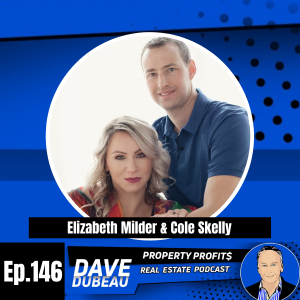
Elizabeth Milder & Cole Skelly are experts in the application of the BRRRR method (Buy-Renovate-Rent-Refinance-Repeat) of real estate investing in the Victoria market. By identifying properties with the potential for adding square footage, Cole and Elizabeth add massive value to the properties they purchase, converting single-family homes to multi-unit rentals (2, 3, and 4 units). After many properties and lessons learned, and 2 spec houses under their belts, Expansion Properties was formed. In this episode, Elizabeth and Cole talk about the strategy they specialize in, the BRRRR, where they especially get character homes to renovate and turn into rental units for them to generate cash flows and revenues.
Topics Covered:
01:40 – What is a BRRRR strategy
03:18 – What are character homes? How do they differ from historical homes?
05:08 – Getting a look at how the BRRRR strategy works with character homes
09:19 – Advantages of construction financing
10:33 – How much cash flow do they generate from renting out the units
11:46 – Approximate gross revenue per month for these kinds of properties and how much is a bank’s appraisal for them
14:06 – Number of years they been doing BRRRR strategy
15:18 – How do they get the work done with renovating the buildings and homes they acquire
17:09 – Recommendation and advice to anyone interested in the same strategy they are into
Key Takeaways:
“Basically, what we’ve been able to do you using BRRRR is, we find these older homes that have tremendous opportunity to add value by way of adding square footage, typically, we’ll dig out the basement. With that lift that gives us the ability to refinance once we’ve gotten to the end of the project and rented it and allows us to pull the money out the capital investment that we’ve put into at the outset and then use that towards another property.” – Elizabeth Milder
“The city of Victoria has a house conversion regulation where you can actually take these older 1900 houses and convert them into legal rental units without doing the rezoning process. So, it’s a character home, but we’re allowed to touch any part of the home. It’s not a heritage home.” – Cole Skelly
“This is one thing that I’ll mention because people often are scared away from deals because the price point is too high. What we’ve learned through a few scenarios now is, don’t be afraid to lowball if you have to, because you never know, it’s always a no unless you ask.” – Elizabeth Milder
“Whenever we’re analyzing a property at the outset, we’re always looking for four to $500 a month cash flow on each door. We found that that’s a really comfortable number to absorb potential vacancies.” – Elizabeth Milder
“One thing that we definitely recommend to any new investor is being very realistic about what it is that you can manage, and having a good understanding of what your finances are because this is something that a lot of people aren’t really in tune with.” – Elizabeth Milder
“I find that we find that a lot of people in talking about investing in property, they often have this kind of pie in the sky idea of what it is they want to do, but they’ve never actually thought about what it takes to see that come to fruition.” – Elizabeth Milder
Connect with Elizabeth Milder & Cole Skelly:
expansionproperties.com
Instagram
Facebook
Connect with Dave Dubeau:
Property Profits Podcast
www.davedubeau.com
www.investorattractiondemo.com
Facebook
LinkedIn
Enjoyed the Podcast?
Please subscribe on iTunes for updates

Tuesday Dec 01, 2020
Tuesday Dec 01, 2020
What you’ll learn in just 17 minutes from today’s episode:
Find out a real estate strategy that lets you earn even without houses, without money, and almost without competition
Learn how to strategically find properties according to buyer profiles to keep consistent cash flows and deals from coming
Discover the unique way of finding buyers and sellers without physically meeting them
Resources/Links:
Learn how to flip real estate for pennies on the dollar – without houses. Click here: http://www.landprofitfun.com/
Join Jack’s private FB Group. Click here: https://www.facebook.com/groups/LandProfitGenerator/
Jack’s podcast: The Forever Cash – Life Real Estate Podcast
Summary:
Jack Bosch is an immigrant from Germany who came to the US pretty much with nothing, but within a matter of 6 years from arriving in the US, and 18 months from getting into real estate, he and his wife Michelle built a system and process that made them 7 and then 8 figures. His method is unique because it’s real estate without houses, without money, and almost without competition.
In this episode, Jack talks about a strategy that he finds simple and easier. It provides him a steady cash flow and revenue. And with buyers profiled according to their buying behavior, it is easier for him to cater to four of the most sought-after markets.
Topics Covered:
01:24 – A simpler investment strategy he is focusing on
03:16 – How does he go about this unique strategy
06:50 – How is land flipping different from house flipping
09:46 – Who are the usual buyers for his land properties
Key Takeaways:
“What we do is land flipping, we flip land like other people flip houses, land flipping is simpler and easier, and in most cases even faster because there are no houses involved, there are none of the inspections involved, there’s none of the kind of termites, none of the repairs, none of the financing.” – Jack Bosch
“With land flipping, you can even do double closings, and you can use assignments, you can use all these different things. You can do the same things without all the complexities that come in with house flipping.” – Jack Bosch
Connect with Jack Bosch:
jackbosch.com
Facebook
Twitter
YouTube
Instagram
Connect with Dave Dubeau:
Property Profits Podcast
www.davedubeau.com
www.investorattractiondemo.com
Facebook
LinkedIn
Enjoyed the Podcast?
Please subscribe on iTunes for updates
Thursday Nov 26, 2020
Thursday Nov 26, 2020
What you’ll learn in just 17 minutes from today’s episode:
Learn how to transition from multi-family homes to development deals
Find out how old office buildings are converted into multi-family deals and still preserving its historical significance
Learn about why development deals are lucrative despite the risks involved
Resources/Links:
bulletproofcashflow.com
Summary:
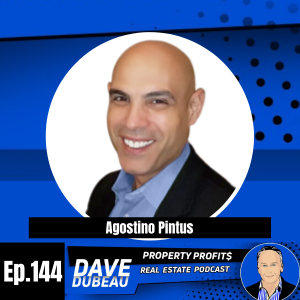
Agostino Pintus is a multi-family investor, syndicator, and entrepreneur with more than 15 years of experience in real estate. He currently oversees strategic partnerships, capital development, and platform development for Realty Dynamics Equity Partners, an investment firm specializing in multi-family acquisition and asset management services.
In this episode, Agostino talks about development deals and how he considers it the ‘next-level step’ though it is a riskier but more lucrative real estate investment. He also shares, how after spending time with multi-family properties, he is into one of his most significant development projects of converting more than a 100-year old The Rockefeller Building from an office building to a multi-family property.
Resources:
bulletproofcashflow.com
Topics Covered:
01:10 – Agostino’s transition from multi-family homes to development deals
03:59 – Is there a difference between a development deal from a redevelopment deal
08:09 – Taking an overview of how a development deal works with The Rockefeller Building
10:27 – How the parking lot would be like for the redevelopment of The Rockefeller Building
12:10 – The turnaround time for The Rockefeller building redevelopment
Key Takeaways:
“There is so much more aside from doing multifamily syndications. And another big aspect and I consider this as the next level stuff. Next level stuff is doing development.” – Agostino Pintus
“What you’re going to find with these development type projects is that they are far more lucrative and a little riskier.” – Agostino Pintus
Connect with Agostino Pintus:
bulletproofcashflow.com
LinkedIn
Facebook
Twitter
Instagram
Connect with Dave Dubeau:
Property Profits Podcast
www.davedubeau.com
www.investorattractiondemo.com
Facebook
LinkedIn
Enjoyed the Podcast?
Please subscribe on iTunes for updates

Friday Nov 20, 2020
Friday Nov 20, 2020
What you’ll learn in just 17 minutes from today’s episode:
Learn how financial planning skills help you make sound real estate business decisions
Find out why a financial planner’s compensation looks small in rates and yet adds up hugely
Discover how you can make use of your tax-free savings account with investments other than real estate
Resources/Links:
meganchomut.com
Summary:
Meghan Chomut is a Financial Planner that works with families and investment property owners to make smart financial decisions. From debt repayment strategies to savings (how much + where), to tax planning and everything in between. She loves helping families get their finances organized, streamlined, and set up properly so they can actually SEE financial freedom (or be ready should an opportunity come up!).
In this episode, Meghan talks about her transition from a financial planner to a real estate investor, how her financial planning skills help in her real estate business, and when it comes to financial planner’s compensation rates, she shows you how it can add up.
Topics Covered:
02:37 – What was her journey like – starting as a financial planner to becoming a real estate investor
07:42 – Owning her own financial planning company
08:50 – How do financial planners get compensated
13:09 – Utilizing tax-free savings account as an additional investment other than a real estate portfolio
14:21 – Her thoughts on self-directed RSP accounts, and self-directed TFSA accounts
Key Takeaways:
“Index investing is really big right now. So, it’s just picking the account that services you best, and for real estate investors, I do think I would lean more towards tax-free savings accounts as opposed to RSP’s because there are some strategies with using RSP should you sell your rental property and trying to reduce the taxes there. But I do see that tax-free savings accounts are really underused and that misunderstanding that literally anything can go in them.” – Megan Chomut
“I personally use self-directed RSP, but it’s kind of on your preference and your comfort level. So maybe starting without one and then as you get more and more familiar with how it all works, moving over to one isn’t a big deal.” – Megan Chomut
Connect with Megan Chomut:
Meganchomut.com
Instagram
Facebook
Connect with Dave Dubeau:
Property Profits Podcast
www.davedubeau.com
www.investorattractiondemo.com
Facebook
LinkedIn
Enjoyed the Podcast?
Please subscribe on iTunes for updates
Tuesday Nov 17, 2020
Tuesday Nov 17, 2020
What you’ll learn in just 17 minutes from today’s episode:
Find out how to grow your portfolio even with no money of your own and no joint venture partners
Learn how to scale up your real estate in a short amount of time
Find out about the analogy of the iceberg and how to get massive growth in real estate
Resources/Links:
elevationrealty.ca
Summary:
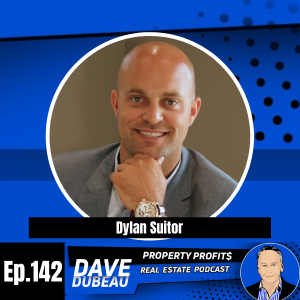
Dylan Suitor has been a real estate agent for 4 years and an investor for 12. He reached massive growth in the past 24 months adding nearly 250 doors to his portfolio without any of his own money nor joint venture partners.
In this episode, Dylan talks about his strategies in growing his portfolio without using any of his own money nor having to raise capital from joint venture partners.
Topics Covered:
01:08 – What number of doors does he have in his portfolio in the last two years
01:57 – How he scaled up so fast in his real estate business
03:06 – Is he a realtor first or a real estate investor first
04:06 – How he built up his portfolio without money of his own and joint venture partners to depend on
07:07 – Typical price point for the type of properties he is buying
10:30 – Talking about private money lenders, first mortgage rate, blended mortgage rate
11:48 – Turnaround time for his properties
14:32 – Is he running his own construction firm or still subcontracting
15:50 – What’s his biggest goal this year
Key Takeaways:
“I went on my own and committed to education for about three years before I started really going big on real estate investing and learned a ton and connected with the right people. And here we are a couple of years later and a few hundred doors later.” – Dylan Suitor
“When you see that short period of time and that large scaling, I just get tired of learning, instead, it’s time to apply. And I found the people I wanted to be in business with and I got to attribute a lot of my success to one of my biggest business partner Robbie, and just really taking something that he had been developing for a few years prior and just blowing it up.” – Dylan Suitor
“The piece that has made us, that allowed us to scale as quickly is making sure that instead of having a money partner that maybe their goal is, 10 million in holdings or 5 million holdings or three properties and then having to find more and more money partners go down the same learning and growth piece, I find one person that I get to grow with through the whole process. And that’s really allowed us to continue to grow at such a large pace.” – Dylan Suitor
Connect with Dylan Suitor:
elevationrealty.ca
LinkedIn
Facebook
Instagram
Connect with Dave Dubeau:
Property Profits Podcast
www.davedubeau.com
www.investorattractiondemo.com
Facebook
LinkedIn
Enjoyed the Podcast?
Please subscribe on iTunes for updates

Friday Nov 13, 2020
Friday Nov 13, 2020
What you’ll learn in just 17 minutes from today’s episode:
Learn what a Profit First System is and how it protects you against yourself
Find out how to build systems in your real estate that truly build wealth
Learn how to tell your dollar where to go so that you can manage your cash flows and always be profitable
Resources/Links:
Richer Soul Podcast: http://richersoul.com/
Profit Answer Man Podcast: https://profitanswerman.libsyn.com/
Profit First: Transform Your Business from a Cash-Eating Monster to a Money-Making Machine by Mike Michalowicz
Summary:
Rocky Lalvani used the Profit First model in his real estate business. He owns rental units and flips houses in Harrisburg, PA. Rocky’s main goal is to help other real estate investors ensure they are always profitable. In this episode, Rocky shares how he uses the Profit First System, and the equation of Sales – Profit = Expenses, where profit is truly accounted for, and bills are paid every time.
Topics Covered:
01:12 – Why profit first
02:55 – The thing with portfolio envy
03:34 – Being the spreadsheet geek that he is
04:38 – What properties did he start with and the deals he’s into now
06:36 – Creating systems that build wealth
08:38 – The need to have a team
12:54 – The need for cash flow management system
13:26 – How do we protect against ourselves
Key Takeaways:
“We can make it work; we can figure out a way we kind of go in the opposite way. We want our deals to be so robust with so much extra room, that when things go wrong, and they usually always do that there is room to handle the mistakes.” – Rocky Lalvani
“If you’re not cash flowing properly, you may not be profitable.” – Rocky Lalvani
“Once I saw the system from Mike and I learned that most business owners weren’t looking at their financial statements, and they couldn’t understand them, I was like, there’s the goldmine for me, this is where I belong. And so that’s where that grouping came together with him.” – Rocky Lalvani
“You’re not going to buy that house and flip it without putting a lot more money into it than you said you had to. And that’s the reality of it.” – Rocky Lalvani
“With the profit first system, you tell your dollars where to go.” – Rocky Lalvani
“We got to get a deal. You are better off waiting and finding the right opportunity than rushing out because I’m sure you’ve heard it a million times. Where’s the money made in real estate? On the purchase.” – Rocky Lalvani
Connect with Rocky Lalvani:
profitcomesfirst.com
LinkedIn
Facebook
Twitter
Connect with Dave Dubeau:
Property Profits Podcast
www.davedubeau.com
www.investorattractiondemo.com
Facebook
LinkedIn
Enjoyed the Podcast?
Please subscribe on iTunes for updates