Episodes
All Episodes

Dec 23, 2022
Dec 23, 2022
17 min
When you're scaling, there's got to be some downside that goes with it. But whatever that is, the significant benefits that happen more than compensate for the cons.
What are those advantages? That's what we will find out in this episode.
Lee Yoder was practicing physical therapist when he realized his true passion was building his own business and investing in real estate. He took this passion and considerable action to quickly build a portfolio with several small apartment buildings. He was able to quickly reposition this portfolio, bring it full cycle, and provide an incredible return for his investors. Today, Lee is focused on syndicating larger apartment buildings.
In this episode, Yoder compares and contrasts working on bigger deals versus the smaller ones with his multifamily portfolio, including the benefits and disadvantages.
Checkout: Raising Capital Without Rejection Full-Day Workshop (Online): https://investorattractionworkshop.com/
What you will learn from this episode for 19 minutes:
Discover the benefits of getting into bigger deals in multifamily properties
Find out how onsite management makes things more efficient and lessens cost
Learn about the disadvantage of dealing with bigger deals and the creative ways to turn them around
Resources/Links:
For FREE materials from Lee Yoder, click here: https://threefoldrei.com/
Apartment.com: https://www.apartments.com/
Rentcafe.com: https://www.rentcafe.com/
Topics Covered:
01:43 - Comparing and contrasting smaller deals versus bigger deals in a multifamily setup [including the benefits of having bigger deals]
04:43 - Number of units to have to justify having an onsite staff to manage the properties
06:07 - Property management staff doing all else other than what their full-time work requires them [and how she is getting paid for this setup]
09:12 - How do they use the 4% that property management people receive
12:10 - The apparent difference in the marketing that they do when it comes to property management doing bigger deals than the small ones
14:10 - Disadvantage of getting into bigger deals with multifamily properties
17:08 - How to get creative with having property management that caters to less than 80 units
Key Takeaways:
"Like the property management company that we're working with now, for all of our properties, they only do the bigger properties. And that's how they're set up. And so, they know how to do that really well. And one thing they do that just blows us away is their marketing. We pay that expense, but what we're getting for it is just blowing us away." - Lee Yoder
"People will talk about, you have one vacancy, and it's not a big deal on a 47-unit like it is in a duplex where you go up to 50% vacant." - Lee Yoder
"With this property management company on the 96-unit, they don't have to charge us for sending somebody out because the people were there. So, the efficiency of it, it's less cost." - Lee Yoder
Connect with Lee Yoder:
Website: https://threefoldrei.com/
Facebook: https://www.facebook.com/threefold.yoder/
LinkedIn: https://www.linkedin.com/in/lee-yoder-25793215a/
Connect with Dave Dubeau:
Podcast: http://www.propertyprofitspodcast.com/
Website: https://davedubeau.com/home
Investor Attraction Workshop: http://www.investorattractionworkshop.com/
Facebook: https://www.facebook.com/thedavedubeau
LinkedIn: http://linkedin.com/in/davedubeau
Dec 16, 2022
Dec 16, 2022
12 min
Want to invest in real estate but avoid the hassle of actively participating in running it? How about cross-border investing in the US? How complicated is it to invest over there with another country's laws and regulations you must deal with?
That's precisely what this episode is about, and all those questions are answered. Let's listen in now.
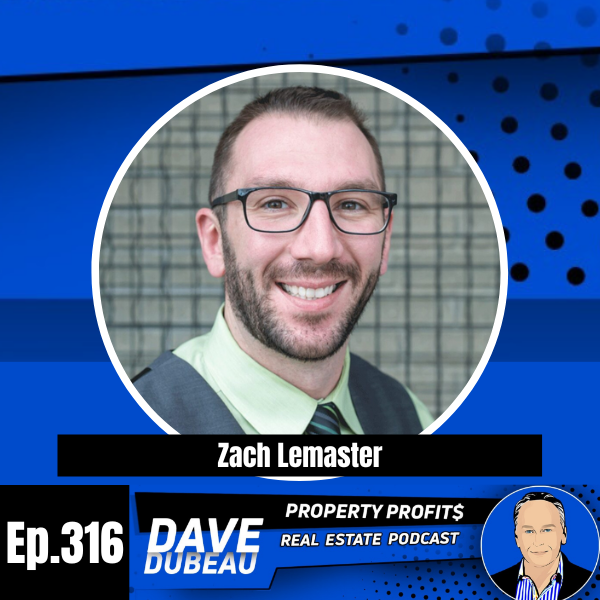
Zach Lemaster is the founder & CEO of Rent To Retirement. Zach is a seasoned real estate investor and licensed broker that has accumulated a large portfolio of rental properties across multiple markets including single-family, multifamily, commercial and new construction. Zach is a licensed Optometrist who practices on a volunteer basis.
In this episode, Zach shares what a turnkey rental property is all about and how you can passively get involved and still earn well. He also talks about how easier it is for cross-border turnkey rental investing to be than you imagined. For him, it is a matter of planning things based on your goal and mapping out strategies to reach it.
Checkout: Raising Capital Without Rejection Full-Day Workshop (Online): https://investorattractionworkshop.com/
What you will learn from this episode for 17 minutes:
Find an investment portfolio that reaps all the benefits of real estate investing without needing to do the heavy lifting.
Discover how you can invest cross-border without double taxation and going through the mess of doing it.
Learn how you can build an attractive portfolio faster without all the complications of cross-border investing.
Resources:
For FREE content all about real estate investing, click here: https://renttoretirement.com/
Topics Covered:
01:29 - Defining what turnkey properties are
03:23 - What's behind going through the trouble of building those properties only to sell them to other investors?
05:39 - Attractive markets for these turnkey properties
08:16 - Rental price range and expected cash flows from these turnkey rentals
9:51 - Overcoming challenges of cross-border investing
Key Takeaways:
"Once we've hit our portfolio needs, we can open it up to our other investors. With every investor, we have a specific investment plan and strategy based on how many assets we want to own. But we've already built those teams and systems. So, you just keep that wheel turning to offer those products to our clients." - Zach Lemaster
"Florida's probably the best market for appreciation, and as well as cash flow right now, because there are so many people moving, there's a huge rental demand." - Zach Lemaster
"We also invest heavily in Alabama, and some Midwestern states. We can have a little bit lower price point, maybe not as much appreciation, but potentially better cash flow would be areas like Kansas City, Missouri, and different areas in Ohio and Indianapolis."- Zach Lemaster
"The tax structure is extremely attractive to own real estate in the US. And it's beneficial for investors to invest here because of that. So there really isn't a lot of reportable income. And they can operate through different tax structures to set themselves up for success, say when they have capital gains, and they want to do something on the exit of the property." - Zach Lemaster
"We've had investors go through conventional loans. When we say conventional, that's your 30-year fixed loan. Many people don't know that that exists for Canadians. But obviously, we do that a lot for our Canadian clients. So, it's just about building a plan and strategy with you based on your goals. And then, mapping it out."- Zach Lemaster
Connect with Zach Lemaster:
Website: https://renttoretirement.com/
Connect with Dave Dubeau:
Podcast: http://www.propertyprofitspodcast.com/
Website: https://davedubeau.com/home
Investor Attraction Workshop: http://www.investorattractionworkshop.com/
Facebook: https://www.facebook.com/thedavedubeau
LinkedIn: http://linkedin.com/in/davedubeau

Dec 9, 2022
Dec 9, 2022
23 min
Do you need help navigating all the market shifts and changes around you? With recession and inflation rising, you must find ways to stay afloat and keep the business running; otherwise, you get stuck or go down the drain.
And this is where lead generation would help a ton, and effective marketing strategies will turn the tide for you and your business.
Mike Simmons is the owner of a successful real estate investing company and a partner in one of the largest mentorship/mastermind companies. He specializes in helping entrepreneurs create systems, processes, and automation that allow them to work on their business and not be slaves to it. He personally worked with hundreds of entrepreneurs to help optimize and grow their businesses.
In this episode, Mike shares why he finds things great for his business even amidst changing markets, recessions, and inflation. He shares his age-old lead generation strategies that worked then and are still working now. His valuable tips on employing these tactics will help you find deals every time.
Checkout: Raising Capital Without Rejection Full-Day Workshop (Online): https://investorattractionworkshop.com/
What you will learn from this episode for 23 minutes:
Learn how to approach a shifting market as an opportunity to make money
Discover marketing strategies that worked before and still work now
Valuable tips on how to make your marketing strategies work every time
Resources:
Get the FREE video course. Mike Simmons teaches you how to do direct mail and a very simple-to-follow five-video course. Click here: https://www.mikesimmons.com/
Who Moved My Cheese: https://www.amazon.com/Moved-Cheese-Spencer-Johnson-M-D/dp/0743582853
Topics Covered:
01:42 - What he thinks when he hears about market shifts, recessions, and inflation
02:37 - Comparing the changes in the market to a weather
04:47 - Marketing tactics that still works for him today
05:22 - His criteria for finding deals and the markets he is focused on
07:04 - Changing geographical footprints but always, equity list over niche list
07:41 - What is a niche list?
11:02 - Which one should you be doing - postcards or letters?
13:30 - Standard size of the postcard he is using and more tips
16:16 - How much do direct mails translate into phone calls a day?
17:40 - This strategy consistently brings in deals
18:29 - Helpful tip when sending direct mails and the estimated average cost when sending them
20:21 - The best frequency for sending direct mails, and to whom should you be sending them
Key Takeaways:
"When I hear market shift, recessions, and inflation and all these things, I usually think the opposite of what the media will lead us to believe that Rome is burning. When those things happen, I think it's always an awesome opportunity for investors." - Mike Simmons
"To me, the market, I think of it like the weather. The market doesn't have a feeling. It's not out to get you; it's not good or bad. It's just what it is. And if you adjust your approach, your model a little bit if necessary to accommodate what's happening in the market, it can always be great." - Mike Simmons
"For the last seven years, direct mail has been the workhorse for me. It's crazy to me that it still works in 2022. It sounds antiquated but it simply does work." - Mike Simmons
"It's important to understand, we talk a lot about ABCD neighborhoods in real estate, really great, really bad. The money is in that BC area." - Mike Simmons
"The first-time home buyers, people who are downsizing, it's just that meaty part of our market. And that's where I do most of my marketing." - Mike Simmons
"What would I do if I was moving into any market? What size list do I want to be mailing to? I usually tell people to shoot for between three and five thousand mailers per month." - Mike Simmons
" I've done a lot of testing. Marketing depends, largely the biggest factor is timing." - Mike Simmons
"The very basic, even black and white or yellow card with black writing, whatever basic message. I want to buy your house. I can close quickly no closing costs. All that basic casual postcard will outperform the highly produced professional postcard every time, and it almost never fails to work that way." - Mike Simmons
Connect with Mike Simmons:
Website: https://www.mikesimmons.com/
Connect with Dave Dubeau:
Podcast: http://www.propertyprofitspodcast.com/
Website: https://davedubeau.com/home
Investor Attraction Workshop: http://www.investorattractionworkshop.com/
Facebook: https://www.facebook.com/thedavedubeau
LinkedIn: http://linkedin.com/in/davedubeau

Dec 2, 2022
Dec 2, 2022
19 min
Real estate can become complex, but you can always opt for simplicity in the way you manage the business.
Do you want to get into real estate without the hassle of tenants, managing people, dealing with repairs and maintenance, toilets, and trash?
That is what we have to dive into in this episode, how to run things simply, even during hard times and still earn more.
Scott Meyers and his affiliated companies focus on the acquisition, development, and syndication of self-storage facilities nationwide. He currently owns and operates over 2,400,000 square feet and over 14,000 units nationwide. His education organization, SelfStorageInvesting.com, provides courses, tools, live events, and mentoring to help others launch their own self-storage business to enjoy a lifestyle, as he has coined, "free from tenants, toilets, and trash!". His various companies fund and build-6 houses each year in Mexico by taking his family, staff, and clients on an all-expense paid short-term mission trip.
In this episode, Scott shares how he loves the simplicity of running self-storage facilities and still earning well even during economic downturns. As he said, this is one investment portfolio that has repeatedly proven itself that works best even in the most trying times.
Checkout: Raising Capital Without Rejection Full-Day Workshop (Online): https://investorattractionworkshop.com/
What you will learn from this episode for 17 minutes:
Discover one investment strategy that is recession-resistant.
Learn about the benefits of having self-storage facilities in your portfolio.
Find out how you can get started with this investment portfolio even with meager or no money in your hands.
Resources:
For all things self-storage, passive or active, click here: https://selfstorageinvesting.com/
Topics Covered:
01:31 - Is self-storage recession-proof?
02:47 - Number of reasons people utilize self-storage
04:33 - In what instances does self-storage not an advantage in a recession
06:03 - The time when auctions go up at the same time as accounts receivable
07:49 - Benefits of having a self-storage included in your portfolio
10:11 - What it looks like managing individual facilities nationwide
12:01 - When do you need someone in person to manage the facility [plus the ancillary income streams coming from managing self-storage]
14:36 - How to get started with self-storage with not much money to spend on it
16:42 - Where you can learn all things self-storage
Key Takeaways:
"When we hit a recession, people downsize, businesses downsize. When there is trauma in their lives or their business, they downsize. And then they put stuff in storage until things turn back around again. And so, we see a spike in demand for storage during a recession." - Scott Myers
"In self-storage, if somebody doesn't pay you, you put an overlock on their unit on the sixth day, and then after 90 days or 60 days, depending upon what state you're in, then you get to sell their stuff off, and the unit opens up again, and you're able to move in the next person waiting in line." - Scott Myers
"Just from a simplicity standpoint, we would rather manage people's stuff than manage people, and we can use technology to run our facilities." - Scott Myers
Connect with Scott Meyers:
Website: https://selfstorageinvesting.com/
Connect with Dave Dubeau:
Podcast: http://www.propertyprofitspodcast.com/
Website: https://davedubeau.com/home
Investor Attraction Workshop: http://www.investorattractionworkshop.com/
Facebook: https://www.facebook.com/thedavedubeau
LinkedIn: http://linkedin.com/in/davedubeau

Nov 29, 2022
Nov 29, 2022
20 min
Deploying BRRRR into your property deals is not a walk in the park, especially when you're new and getting yourself wet in the waters.
Experimenting with what works and what doesn't would take most of your time, money, and effort. This doesn't work well when you want to maximize your profits. Besides, you also have your joint partners to consider who would benefit from your earnings.
You either do things on your own, risk your limited resources or learn how to grow faster from someone who has successfully done the same thing.
Adrian Pannozzo is a Retired Police Sgt from Peel Regional Police. He began investing in real estate 10 years ago and now owns over 50 + multifamily homes and over 200 units. He specializes in joint venture partnerships incorporating the BRRR strategy.
In this episode, Adrian shares how he scaled his real estate investing deals in multifamily properties by streamlining processes and establishing systems that give his joint venture partners the confidence to rinse and repeat their capital with him.
Checkout: Raising Capital Without Rejection Full-Day Workshop (Online): https://investorattractionworkshop.com/
What you'll learn in just 21 minutes from today's episode:
Learn of the concept to use when scaling your real estate investing business for BRRRR
Find out how to generate profit from properties situated in unfriendly landlord areas
Discover a system that scales your BRRRR success faster and allows investors to rinse and repeat their capital with you.
Resources:
Website: http://www.investwithepc.com/
Topics Covered:
01:44 - Perfecting the BRRRR strategy
03:08 - How his real estate business catapulted to what it is today
04:08 - What his BRRRR projects are made of
05:19 - Explaining the concept he uses to grow his multifamily buildings portfolio
06:03 - Turning properties into a profitable portfolio even with an unfriendly landlord area
07:50 - Estimated amount budgeted for cash for keys expense
08:49 - Dealing with problem tenants
10:58 - How much are rents going to cost now after renovations with his 45-unit building
12:04 - What his joint venture structure looks like, and the refinancing timeframe for these bigger deals
14:49 - Share structure he employs for his deals
16:08 - Discussing the 'Costco Effect' he uses to scale his BRRRR business
17:14 - Keeping it all in-house
18:01 - What his power team looks like
19:29 - How to pick his brain and what his podcast is
Key Takeaways:
"I think we've progressed into what I like to say the Costco effect. We have our group of companies under one roof, who facilitate these incredible returns and help the success of our BRRRRs." - Adrian Pannozzo
"We're just persistent. Ultimately, you can't force them [tenants] to leave, they have rights, obviously, under the landlord-tenant board. But it's just baby steps, and negotiation and helping them find a new place."- Adrian Pannozzo
"98% of the time, we keep it at 50/50. But there have been occasions where we've done bigger deals to modify the share structure, given the amount of capital required. We just want to be fair both ways. We tried to create that win-win scenario between ourselves and them." - Adrian Pannozzo
"We have in-house property management and whatnot. My word is the 'Costco Effect' of having these companies under one roof. And our mindset was we wanted to appeal to those joint venture partners, investors that walk through the door, and there's everything under one roof."- Adrian Pannozzo
Connect with Adrian Pannozzo:
Website: http://www.investwithepc.com/
Podcast: https://podcasts.apple.com/ca/podcast/more-to-life-real-estate-investing-podcast
Connect with Dave Dubeau:
Podcast: http://www.propertyprofitspodcast.com/
Website: https://davedubeau.com/home
Investor Attraction Workshop: http://www.investorattractionworkshop.com/
Facebook: https://www.facebook.com/thedavedubeau
LinkedIn: http://linkedin.com/in/davedubeau

Nov 25, 2022
Nov 25, 2022
17 min
With the likelihood of the current global situation going into recession, there's cause for panic. Mostly, that's how people feel as times get challenging.
But as real estate investors, burying your head in the sand doesn't make anything better. You must look for ways to ride through the times and still bring in money.
That's exactly what this episode is about, finding options to cushion the negative impact of downturns. Join us now!
Michael Ponte founded Savvy Investor to empower individuals so that they can break through any barrier to enjoy the kind of life they envision for themselves and their loved ones.
In this episode, Michael shares that as someone who has been through many economic downturns in the past, there can always be opportunities, even amidst increasing interest rates. You only have to look around, sweeten the deals, and make your properties earn income.
Checkout: Raising Capital Without Rejection Full-Day Workshop (Online): https://investorattractionworkshop.com/
What you will learn from this episode for 17 minutes:
Learn how to find opportunities even with increasing inflation rates
Find other creative deals to sweeten underwater properties, so you can continue earning cash flows from them.
Learn how to find value in the experts and more experienced people on how to pivot your business in economic difficulties.
Resources:
Head on to Michael's Facebook Group for additional FREE resources, engagement, and education: https://www.facebook.com/groups/341243106757064
Topics Covered:
01:31 - Overcoming the fear of buying properties in today's market
03:35 - Seeing opportunities regardless of interest rates
07:54 - Options you can choose to find opportunities for underwater properties
12:36 - Finding value in others who are experts and more experienced in their opinions
and advice as to navigating the market in these uncertain times
Key Takeaways:
"There are opportunities everywhere, regardless of what's going on with interest rates." - Michael Ponte
“Affordability is going to be the biggest driver over the next six months to a year. And when things become unaffordable, people have to change, they have to pivot, they have to do something differently.” - Michael Ponte
“The reality is, if we see some of that inventory starting to creep back up, and the only thing that's going to attract buyers to buy the property is possibly pricing discounts into the property in itself. So, is that something people should be paying attention to? The answer is yes, you should, because this can be huge opportunities.” - Michael Ponte
Connect with Michael Ponte:
Website: https://thesavvyinvestor.ca/
Instagram: https://www.instagram.com/savvy_investors/
Facebook: https://www.facebook.com/groups/341243106757064
Connect with Dave Dubeau:
Podcast: http://www.propertyprofitspodcast.com/
Website: https://davedubeau.com/home
Investor Attraction Workshop: http://www.investorattractionworkshop.com/
Facebook: https://www.facebook.com/thedavedubeau
LinkedIn: http://linkedin.com/in/davedubeau

Nov 22, 2022
Nov 22, 2022
16 min
With the market still not in good shape these days, nothing is really certain. Most are in panic mode, if not anxious, about what's to come, especially where your investments are concerned.
But for your peace of mind, investing in recession-resistant properties will help you sail through turbulent times and come out strong.
Chris Larsen is the founder and Managing Partner of Next-Level Income, through which he helps investors become financially independent through education and investment opportunities. Chris has been investing in and managing real estate for over 20 years.
In this episode, Chris shares which properties he invests in keep him and his business afloat during hard times. Not only that, but he also shares the clever tactic he employs in all these asset classes he invests in that keeps on raking in good income despite the times.
Checkout: Raising Capital Without Rejection Full-Day Workshop (Online): https://investorattractionworkshop.com/
What you will learn from this episode for 19 minutes:
Determine which metrics you have to be looking at in evaluating recession-resistant properties to buy
Find out investment asset class that helps you strongly sail through economic downturns
Discover a tactic to use with your asset-class investments to keep you afloat during hard times
Resources:
Get your FREE eBook: Next Level Income by Chris Larsen https://www.nextlevelincome.com/book
Topics Covered:
01:33 - Metrics to watch out for when evaluating properties to buy and where the market is headed at this time
06:05 - What is it about the stock market peaking this year?
08:31 - Recession-resistant property asset classes you can invest in
11:33 - Understanding the 'Warren Buffet Investing Strategy'
12:31 - An even more recession-resistant investment portfolio
14:31 - What makes this a low-cost maintenance investment strategy
15:45 - Another investment strategy that helps ride you through the market downturns
Key Takeaways:
"I talked about multifamily, but I really talked about a value-add strategy." - Chris Larsen
"We just take our strategy [value-add], how can we apply this to other assets as well, and repeat the same." - Chris Larsen
"The cool thing is, and this is our strategy, what we do is we go in, and we use much technology these days, and we can save a lot of money." - Chris Larsen
Connect with Chris Larsen:
Website: https://www.nextlevelincome.com/
LinkedIn: https://www.linkedin.com/in/nextlevelincome/
Facebook: https://www.facebook.com/nextlevelincomeshow
Instagram: https://www.instagram.com/thenextlevelincomeshow/
Connect with Dave Dubeau:
Podcast: http://www.propertyprofitspodcast.com/
Website: https://davedubeau.com/home
Investor Attraction Workshop: http://www.investorattractionworkshop.com/
Facebook: https://www.facebook.com/thedavedubeau
LinkedIn: http://linkedin.com/in/davedubeau

Nov 18, 2022
Nov 18, 2022
15 min
It's often the notion that money is hard to earn during an economic crisis. People are freaking out, and most are scared and refuse to see the brighter side.
Open your mind to the possibility that opportunities abound. Only through education will you learn to turn things around during a downturn.
Our two guests for today prove that. Come and join us in this episode!
Bill Guting is one of the Founders and Partners of the DreamVest group of companies, which invests in commercial and residential projects in prime U.S. markets with the greatest potential for cash flow and/or long-term equity growth potential.
Kimmie Nguyen is a Co-Founder and Partner in the DreamVest group of companies. She balances her busy career with an equally active personal life. Happily married with two active and wonderful boys, most of her free time is spent traveling and on a wide variety of family activities.
In this episode, Bill and Kimmie have shown that where others fear, they have found their strength, finding opportunities in an economic crisis. While others are conservative, they are creative in finding deals that get them past the down times.
Checkout: Raising Capital Without Rejection Full-Day Workshop (Online): https://investorattractionworkshop.com/
What you will learn from this episode for 17 minutes:
Learn to see an opportunity rather than a recession during the financial crisis
Find out creative deals you can dive into that see you through market ups and downs
Learn how to combat the fear of the unknown with education
Resources:
For more of Bill and Kimmie’s valuable resources, check out here: https://gimmesomemore.info
Topics Covered:
01:35 - Are we in a recession? Let's hear their opinions...
03:33 - What could be the reasons for the housing market to crash? [taking into account past historical data]
08:41 - Getting ready for any recession eventuality
10:21 - Creative deals to turn to during a recession
12:25 - Making money during a financial crisis [and the best asset class to resist its impact]
14:29 - Education is key to finding opportunities
Key Takeaways:
"When people hear recession, when we talk about recession, potential depression, people get fearful. But what we try to do is get people to reframe. When you see a recession or even depression, don't see a recession; see opportunity." - Bill Guting
"Seller financing, lease options, master lease options become available, not just in multifamily, but all amongst all asset classes. Those are some types of opportunities that become more prevalent and available in a downturn." - Bill Guting
"The whole ability to raise aggregate capital is probably one of the most valuable skills you can develop right now." - Bill Guting
"We know a lot of people who make millions in the financial crisis, when you know, the right timing to go in" - Kimmie Nguyen
Connect with Bill Guting and Kimmie Nguyen:
Website: https://gimmesomemore.info
Connect with Dave Dubeau:
Podcast: http://www.propertyprofitspodcast.com/
Website: https://davedubeau.com/home
Investor Attraction Workshop: http://www.investorattractionworkshop.com/
Facebook: https://www.facebook.com/thedavedubeau
LinkedIn: http://linkedin.com/in/davedubeau

Nov 15, 2022
Nov 15, 2022
19 min
Want to go big so quickly? Then, be prepared to do things massively and differently.
That means creating a solid foundation for your real estate business. And that includes working on your personal development via high-ticket coaching and consistent quality networking.
Interested to know what that looks like for you? Come join us in this episode as our guest shows us how he uses one analogy to scale his business quicker.
Tate Siemer is the visionary and CEO of GreenLight Equity Group, which currently owns 595 units totaling $49.5M in value in Oklahoma City, and Columbus, OH. Tate's passion is improving apartment buildings in such a way that maximizes the value of community.
In this episode, Tate shares how, with the use of the bamboo analogy, he has to work on solidifying the foundation of his real estate business to prepare for something big. If it meant diving deep into high-level mastermind courses, so be it. That's what he did. Plus, the networking, mixing, and mingling with those who greatly impact him personally and professionally.
Checkout: Raising Capital Without Rejection Full-Day Workshop (Online): https://investorattractionworkshop.com/
What you will learn from this episode for 18 minutes:
Find out one valuable step you must do to tackle bigger responsibilities in growing your real estate business.
Learn how to leverage others' expertise and authority to scale your business.
Discover how you can contribute to your network even as a newbie with little solid experience.
Resources:
Book a FREE 15-minute consultation with Tate. Click here: https://glequitygroup.com/
Topics Covered:
01:31 - Changing his podcast name
02:47 - What it required to get all things built up in so short a time
04:42 - An analogy he attributes to how he runs his business and the crucial steps you need to make when you want to go big.
10:10 - What can a newbie bring to the table with no prior experience
12:08 - Scaling a 12-unit deal into many times more deals so quickly [refinancing strategies employed]
13:34 - Failures and setbacks while building the business from the ground up and learning from them
14:45 - What makes things challenging on a mindset level
16:05 - Strengthening your capital-raising infrastructure and processes
18:00 - Leveraging professionals to accelerate your learning curve
21:30 - Making sense of faith coupled with actions and the right mindset
Key Takeaways:
"In addition to the coaching mastermind, I went to several national conferences. I highly recommend those to listeners because people talk about getting in the right rooms, and you also have this concept that your network is your net worth." - Tate Siemer
"I will attack these conversations and networking from a value-add standpoint. Going to be looking at this, like how can I help other people?" - Tate Siemer
"This is very much a team sport. And everybody's got value. Even if you haven't done a deal yet, of course, you want to make yourself more and more valuable quickly by exposing yourself to as much knowledge and experience as you can." - Tate Siemer
"When I do presentations and do my podcasts, we talk a lot about the mindset piece. And it's so fundamental to really believe that you can do the business." - Tate Siemer
Connect with Tate Siemer:
Website: https://glequitygroup.com/
Connect with Dave Dubeau:
Podcast: http://www.propertyprofitspodcast.com/
Website: https://davedubeau.com/home
Investor Attraction Workshop: http://www.investorattractionworkshop.com/
Facebook: https://www.facebook.com/thedavedubeau
LinkedIn: http://linkedin.com/in/davedubeau

Nov 11, 2022
Nov 11, 2022
19 min
Heard of the stigma surrounding probates in real estate investing?
While there has been a discredit to probate matters, there is always a way to turn things around and let the deceased's executors and heirs call you up to sell the property.
That's where your branding and marketing strategy makes a difference.
Sharon Vornholt is the owner of Innovative Property Solutions in Louisville, KY. She began investing in 1998 and was originally a rehabber and a buy-and-hold landlord. However, when the market crashed in 2008, she became an "accidental wholesaler." Sharon loves helping real estate investors build a profitable business by specializing in off- market deals.
She is also passionate about empowering and educating women who are interested in real estate investing.
In this episode, Sharon shares a reliable marketing strategy that is simplified, gets you ahead of your competitors, and consistently fills your client pipeline.
Checkout: Raising Capital Without Rejection Full-Day Workshop (Online): https://investorattractionworkshop.com/
What you will learn from this episode for 18 minutes:
Learn about what probate is in real estate investing and how to go about the whole process
Find out the marketing and branding strategy that works to generate probate leads consistently
Discover profitable investment strategies you can employ on probate properties
Resources:
Check out Sharon's resources:
Louisville Gal's Real Estate Blog: https://Louisvillegalsrealestateblog.com
Probate Investing Simplified Course: https://probateinvestingsimplified.com
Podcast-iTunes: Let's Talk Real Estate Investing: https://podcasts.apple.com/us/podcast/lets-talk-real-estate-investing-with-sharon-vornholt/id784109559?mt=2
Topics Covered:
02:07 - What is probate as it relates to real estate investing?
04:23 - Overcoming the bad reputation attached to probates in real estate investing
07:17 - Generating probate leads [which one to approach]
11:28 - Marketing strategy she relies on when it comes to approaching probate prospects
12:54 - What market size does this probate in real estate investing work
15:01 - The timeline you need to hold on to your probate mailing list
18:11 - Closed probate deals she got from consistently marketing
19:48 - What are the best investment strategies for probate properties
Key Takeaways:
"You really need not a lot of information to work in probate; you need the name and address of the deceased and the name and address of the executor or the personal representative." - Sharon Vornholt
"From a branding and marketing perspective, anytime you can get in front of a seller, it's always better for you. Then if you have to go through an agent, work with agents. But, getting in front of a seller, you have the chance to show who you are." - Sharon Vornholt
"I'm relying on the mailers now that's in conjunction with having a website so that they can check you out because they are going to check you out."- Sharon Vornholt
"You mail everybody every month; it's consistency. Because your competition, 90% of the people will stop on or before the third mailing. That's what you need to hang on to. They're going to get in there, and they don't get a bunch of deals in the first month or two. They're gone. So, you've got to be the last man standing." - Sharon Vornholt
"My rule is, mail everybody every month as long as the house is available." - Sharon Vornholt
Connect with Sharon Vornholt:
Website: https://sharonvornholt.com
Facebook: http://www.facebook.com/sharon.vornholt
LinkedIn: http://www.linkedin.com/in/sharon.vornnholt
Twitter: http://www.twitter.com/svornholt
Instagram: https://www.instagram.com/sharonvornholt/
Connect with Dave Dubeau:
Podcast: http://www.propertyprofitspodcast.com/
Website: https://davedubeau.com/home
Investor Attraction Workshop: http://www.investorattractionworkshop.com/
Facebook: https://www.facebook.com/thedavedubeau
LinkedIn: http://linkedin.com/in/davedubeau

Nov 8, 2022
Nov 8, 2022
17 min
People buy things now to sell them higher years from now. That, if you could get lucky. What if something goes wrong? How can you recoup what you've invested?
This is the scenario with pre-construction condos. The market is good now, and down the road, something crops up that would alter everything you've set out at the start.
Tracy Ma is a thriving consultant, social entrepreneur, successful real estate & stock investor, and unquenchable lifelong learner.
In this episode, Tracy Ma shares why she doesn't favor preconstruction condos even though it works for others. At the same time, she also talks of ways to protect yourself if you change your mind in the middle of the whole construction and how to bring in cash flows through long and short-term rentals afterward. She also discusses other profitable deals you can get into with less trouble.
Checkout: Raising Capital Without Rejection Full-Day Workshop (Online): https://investorattractionworkshop.com/
What you will learn from this episode for 18 minutes:
Discover exit strategies you can have to rake in cash flows and make the most of your investment with pre-construction condos
Find out what you need to know when buying pre-constructed condos and the consequences when walking away when unit values get higher
Learn about an investment portfolio that earns well even in its simplicity and helps you avoid a lot of headaches
Resources:
Get Tracy's FREE real estate investing toolkit. Click here: https://www.youtube.com/c/FinancialNirvanaMama
Topics Covered:
01:47 - What are preconstruction condos all about?
03:14 - Understanding the speculation game about pre-construction condos
07:43 - Consequences of walking away after the unit is appraised at a higher value years later
09:22 - What her real estate investing journey was like after pre-construction condos
11:31 - Which markets is she finding opportunities in these days
12:43 - Outsourcing and self-managing properties at the same time
14:06 - You have the choice to be a part-time or full-time real estate investor
17:43 - Where you can get the most out of Tracy's resources
Key Takeaways:
"If you did get into a preconstruction condo, and you're changing your mind, I think initially, one thing that you could do to immediately protect yourself before you sign any papers is have the right to assign." - Tracy Ma
"Out of all the different types of real estate, traditional strategies, residential buy and hold strategies are the one I prefer for the simplicity of the unit. " - Tracy Ma
"I want to help people realize that you can invest your money and make it work harder rather than you work harder so that you could take more time, living your best life and not be sucked into this nine to five grind." - Tracy Ma
Connect with Tracy Ma:
Website: https://www.financialnirvanamama.com/
Connect with Dave Dubeau:
Podcast: http://www.propertyprofitspodcast.com/
Website: https://davedubeau.com/home
Investor Attraction Workshop: http://www.investorattractionworkshop.com/
Facebook: https://www.facebook.com/thedavedubeau
LinkedIn: http://linkedin.com/in/davedubeau

Nov 4, 2022
Nov 4, 2022
19 min
Finding a solution to any dire situation? Real estate has a way of making money out of others' inefficiencies.
Think of it as a win-win for investors and defaulting parties. You provide the lifeline for them while you earn helping them.
How does that play out? Let's listen to this episode and learn a ton of insights.
Bill Bymel is the founder of RSI Asset Management, a Florida-based advisor to private equity funds investing in real assets. He is also a certified property management executive and Managing Director at Spurs Capital, an investment manager that specializes in distressed investments. His talents are widely acknowledged in the industry.
In this episode, Bill shares how real estate makes his life exciting, making a lot of money from helping people in distressed situations.
Checkout: Raising Capital Without Rejection Full-Day Workshop (Online): https://investorattractionworkshop.com/
What you will learn from this episode for 18 minutes:
Discover how to make money from performing and non-performing loans
Find out how this loan restructuring becomes a win-win strategy both for the investor and defaulting borrower
Learn how this investment strategy works well not just for large but average investors as well
Resources:
Get a copy of Billy Bymel's book, 'Win-Win Revolution': Click here https://billbymel.com/#book
Topics Covered:
01:18 - Describing the business he revolves around
02:03 - Performing notes versus non-performing notes and how you earn from them
03:35 - How is it a 'predatory' at the same time a 'good guy' kind of business
06:00 - Looking at how buying non-performing notes operate and what percentage do they collect and foreclose on
09:19 - Bill's win-win strategy for his business and the defaulting borrower
13:56 - What that looks like reselling the original non-performing notes to another investor
15:12 - Seeing an opportunity for average investors to be involved in buying performing and non-performing notes
Key Takeaways:
"One of the things that set us apart from the very beginning was when other lenders were calling, collecting payments, we were calling asking borrowers, 'How would you like to see this resolved?' And it became a paradigm for helping people create win-win strategies to resolve this." - Bill Bymel
"Being in the position that I'm at dealing with people in a distressed situation and providing a lifeline to that is one of the most rewarding ways to live a life and make a lot of money." - Bill Bymel
"When I look at the history of my last ten years, and having done this to the tune of close to a billion dollars of invested dollars in the space, the best returns are keeping people in their home: buying something, getting a payment going, and then re-performing it." - Bill Bymel
Connect with Bill Bymel:
Website: https://billbymel.com/
Connect with Dave Dubeau:
Podcast: http://www.propertyprofitspodcast.com/
Website: https://davedubeau.com/home
Investor Attraction Workshop: http://www.investorattractionworkshop.com/
Facebook: https://www.facebook.com/thedavedubeau
LinkedIn: http://linkedin.com/in/davedubeau

Nov 1, 2022
Nov 1, 2022
21 min
Imagine working full time, being a mom to two kids, and doing a five-day-per-week podcast…
That sounds like a lot of work, but our guest today is the living epitome that juggling all that is definitely doable!
I’ve been podcasting since 2018, but I’ve never really thought of producing episodes every single day. Join us today as we learn why she decided on such a frequency for her podcast and how she uses that as a platform to connect with people.
Aileen Prak is the co-founder of Bonavest Capital, where she helps people generate passive income through real estate syndications. She is on the oath to creating time freedom for her family and two young children and believes real estate is the best vehicle that can help her and others achieve this dream.
Aileen received her MBA from Northeastern University and has over 10 years of experience in the Aerospace industry as the finance lead on several multi-million-dollar projects.
She is also the host of the 5-day-per-week real estate podcast, “How Did They Do It? Real Estate”, where she interviews top experts in the Real Estate Industry with a focus on personal growth and real estate investing.
In this episode, Aileen shares how she’s able to do a five-day-per-week podcast along with working fulltime and being a mom of two. She also discusses how podcasting is a great platform to establish your network, eventually turning your listeners to potential clients/investors.
Checkout: Raising Capital Without Rejection Full-Day Workshop (Online): https://investorattractionworkshop.com/
What you'll learn in just 21 minutes from today's episode:
Find out how you can use podcast as a platform to establish your network;
Understand the philosophy behind doing a daily podcast despite all the work it requires; and
Discover how asking the right questions help your audience see you as an expert, not just the guests you bring on to the show
Resources/Links:
Check out Aileen’s podcasts:
How Did They Do It? Real Estate podcast: https://bonavestcapital.com/podcast/
High Income Earners F.I.R.E podcast: https://www.hiefire.com/
Topics Covered:
01:08 – When did Aileen first decide to start her own podcast, and why?
03:11 – Then and Now: Doing a seven-day podcast then changing it to one that goes live five days in a week
04:53 – Answering Dave’s questions about the “How Did They Do It? Real Estate” podcast
06:07 – How Aileen manages to do a five-day-per-week podcast along with her already busy life
07:54 – The philosophy behind the frequency of the podcast
09:13 – The time it takes to reach one’s goals through podcasting
11:53 – How to make your audience see you as an expert as well and not just your guests so you can transition your listeners to potential investors
16:40 – How they’re able to have guests on board, enough to have content for weeks
18:59 – The second podcast: High Income Earners F.I.R.E podcast
20:39 – Connect with Aileen Prak
Key Takeaways:
“With the podcast, you’re able to create a thought leadership platform. And so, when people come to listen to you, they’re able to not just see you as a thought leader in the space, as a person to provide resources, bringing on other people and sharing their knowledge as well; it’s also about establishing a relationship with the listeners way beforehand. For us, by getting in front of our audience five days a week, we’re just making and establishing that much more connections with them than if we were to do it weekly or bi-weekly.” – Aileen Prak
“You want to be with people that you know, like, and trust; and the podcast, especially, is a fantastic way to establish and solidify that relationship.” – Aileen Prak
“What we’ve been finding out is that people who are actually financially independent don't necessarily retire. They just get to choose what they want to do, and a lot of them continue to choose to work and do the things they love.” – Aileen Prak
Connect with Aileen Prak:
Email: aileen@bonavestcapital.com
Website: bonavestcapital.com
Instagram: https://www.instagram.com/howdidtheydoit.realestate/
LinkedIn: https://www.linkedin.com/in/aileen-prak-539659140/
Podcast: https://bonavestcapital.com/podcast/
Connect with Dave Dubeau:
Podcast: http://www.propertyprofitspodcast.com/
Website: https://davedubeau.com/home
Investor Attraction Workshop: http://www.investorattractionworkshop.com/
Facebook: https://www.facebook.com/thedavedubeau
LinkedIn: http://linkedin.com/in/davedubeau

Oct 28, 2022
Oct 28, 2022
20 min
With real estate, you can create a significant amount of wealth. Besides, you don't need a degree to be in it, it's not even a question of whether you're young or old. It's just for everyone from all walks of life.
But how do you do it? How are some able to become successful at it in so short a time?
This episode is highly recommended and should not be missed, for my colleague and good friend July generously reveals how you can grow your net worth, increase your property's value at a faster rate than you might think possible. Funding projects is one of her specialties, as she is all about investor relations. The failure to lend your ear to her is a missed opportunity.
July Ono is the author of "The 7 Profit Centers in Real Estate", and a co-founder of OTBEC Capital Management Inc with over 17 years of real estate investment and management experience. She is excited about every aspect of it.
Checkout: Raising Capital Without Rejection Full-Day Workshop (Online): https://investorattractionworkshop.com/
What you will learn from this episode for 19 minutes:
Learn how to leverage someone else's money to finance a property.
Hear of real estate's seven profit centers and understand how you buy more with less money.
Discover how you can accelerate your net worth in less than two years’ time.
Resources:
Get the eBook FREE, The 7 Profit Centers in Real Estate: http://julyono.com/
Topics Covered:
01:59 - What made July pick real estate as a ticket to financial independence
02:36 - Taking a look at her life before real estate
04:28 - The first of the seven profit centers one should be focusing on
06:26 - Creating equity upfront for smaller deals
08:02 - Buying more but with less money [The second important profit center]
09:18 - Why cashflow is king [the third profit center]
11:06 - What a good cash flow looks like for a smaller deal of a property
11:45 - Talking about the fourth profit center [understanding the principal pay down concept]
14:01 - How she shortened a ten-year goal into eighteen months
15:14 - What is the use of 'tax benefits' [talking about the fifth profit center]
17:20 - Discussing the sixth profit center [and what to be cautious about it]
20:33 - The last of the profit center and the best thing you can do about it
Key Takeaways:
"We chose real estate, my husband and I, because it is accessible to everybody. There are no restrictions; you don't have to have a special degree. You can be an immigrant and not understand English. Real estate is available to everyone, young and old." - July Ono
"I do the little things every single day. And little things incrementally add up. I didn't think I was going to be a millionaire in a year and a half."- July Ono
"Some people get emotionally entangled with the investor candy, I call it, they're looking at all the wrong things. You have to look at the numbers. They're brutal. And if it doesn't work, you have to have the discipline to walk away. And if you can't walk away on your own, you surround yourself with a team who can walk away."- July Ono
"Just imagine you're putting, let's say 25% down to buy an asset, but your return is based on the 100% value of the building. So, your money is already increasing its leverage four times."- July Ono
"I love looking at my annual mortgage statements because that's when I update my net worth. It's getting less and my equity's getting more."- July Ono
"The tax benefits, that's why it's great because all of a sudden if you're borrowing money for the investment off your line of credit, for instance, that line of credit payment, you can deduct it as a cost of doing business."- July Ono
"Buy passive income with your equity. That's the highest and the best thing you can do with your capital. Capital is scarce. It's rare; it's precious. And so, when you have it, you hang on to it by investing it so that it makes more."- July Ono
Connect with July Ono:
Website: http://julyono.com/
Connect with Dave Dubeau:
Podcast: http://www.propertyprofitspodcast.com/
Website: https://davedubeau.com/home
Investor Attraction Workshop: http://www.investorattractionworkshop.com/
Facebook: https://www.facebook.com/thedavedubeau
LinkedIn: http://linkedin.com/in/davedubeau
Oct 25, 2022
Oct 25, 2022
13 min
What is the foundation we need to set before we start raising capital and encourage people to invest with us and our deals?
Unfortunately, very few people have a clear idea on how much money they’re actually making, spending, and putting into debt. In addition to that, we also have limiting beliefs around money since our early age. These lead to us, seeing money from a negative perspective. But with today’s guest, we’ll understand why we should first get our own financial house in order before having people invest with us.
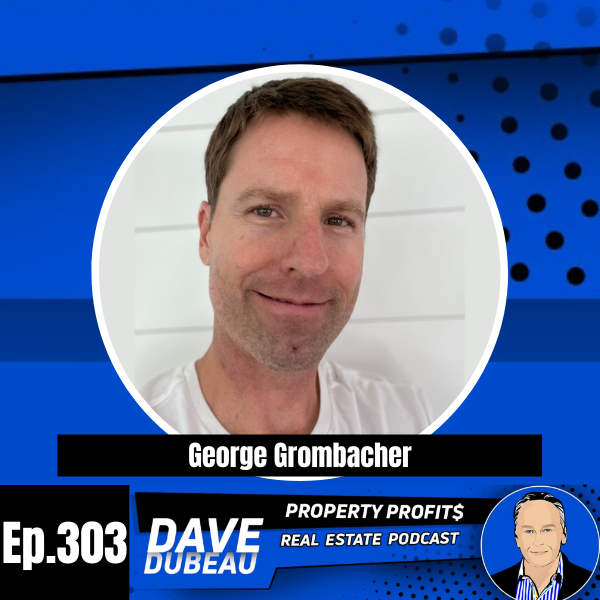
George Grombacher is the Founder and Chief Community Officer of Money Alignment Academy, and the host of the LifeBlood podcast. He's working to help people get better at money so they can live how they want.
In this episode, George explains how we can turn our negative thoughts around money to positive ones as he lets us know why first having our finances in order could be the best move we could make towards financial prosperity.
Checkout: Raising Capital Without Rejection Full-Day Workshop (Online): https://investorattractionworkshop.com/
What you'll learn in just 13 minutes from today's episode:
What the biggest limiting beliefs people have around money are
How to turn our negative thoughts around money to something that is positive
How financial difficulty during early age could affect how people deal with their financial matters later on in life
Resources/Links:
Money Alignment Academy: https://moneyalignmentacademy.com/
Money Alignment Academy’s FREE courses:
Goals Course: https://moneyalignmentacademy.thinkific.com/courses/goals-course
Get Out of Debt: https://moneyalignmentacademy.thinkific.com/courses/Get-Out-of-Debt-Hidden
LifeBlood podcast: https://moneyalignmentacademy.com/lifebloodpodcast/
Topics Covered:
00:56 – Discussion around the whole Money Alignment Academy philosophy
02:21 – Why you should first get your finances in order before encouraging other people to invest in you/your deals
03:58 – We have an operating system, but usually, a lot of that are limiting beliefs
06:19 – The biggest limiting beliefs people are having over and over again
08:34 – How to turn our negative thoughts around money to something that is positive
11:07 – Connect with George Grombacher
12:07 – What the LifeBlood podcast is all about
Key Takeaways:
“People need a lot more help than they’re getting.” – George Grombacher
“You’re never going to reach financial prosperity until you first reach financial security.” – George Grombacher
“Knowing your cashflow, keeping, maintaining, and keeping an eye on your budget – those are the least sexy things that we can do and talk about from a financial standpoint, but they’re so foundational and we just have to do it. If we want to get a little sexier, we can start talking about what our beliefs about money are, what our operating system really is, because that really goes to the foundational piece there.” – George Grombacher
“The more we can start to sort of dig in, pop the hood, and look around what’s going on, I think that that’s all for the better.” – George Grombacher
“Really examining and thinking about what your beliefs are, I think that could make things a lot easier.” – George Grombacher
Connect with George Grombacher:
Website: https://moneyalignmentacademy.com/
Podcast: https://moneyalignmentacademy.com/lifebloodpodcast/
Connect with Dave Dubeau:
Podcast: http://www.propertyprofitspodcast.com/
Website: https://davedubeau.com/home
Investor Attraction Workshop: http://www.investorattractionworkshop.com/
Facebook: https://www.facebook.com/thedavedubeau
LinkedIn: http://linkedin.com/in/davedubeau