Listen on:









Episodes

Friday Oct 02, 2020
Friday Oct 02, 2020
What you’ll learn in just 17 minutes from today’s episode:
Learn about the tools and systems to automate your transactions to become more efficient in getting your leads and finding undervalued properties
Find out how to run your real estate business by removing the day-to-day operations off yourself
Find out the essential steps on how to get deals every time
Resources/Links:
The 7 Simple Steps Guide on Closing a Real Estate Deal in 3 Weeks
Summary:
Laura Alamery began in real estate in 1987 while studying in Honolulu, Hawaii. Also where she joined Dolman and Associates as an agent. She moved to Missouri after graduating in 1991, receiving her real estate Broker license in 1993 when she started her own brokerage company, Midwest Realty Corp. Her core business was flipping properties, with a management division for clients who purchased properties from her.
In 2001 she started a real estate investment club with a group of cash investors, buying and selling foreclosure properties. She quickly became very active in this sector in St. Louis, with an average turnaround of 40 buildings per year.
In this episode, Laura, who has been in the industry for decades-long, talks about reinventing her real estate business from being manually-led to an efficiently automated one. She uses tools and systems to run the day-to-day operations, thus, creating a business around her lifestyle and not the other way around.
Topics Covered:
01:22 – Transitioning to ultimate virtual online real estate investing model
03:30 – What is it about wholesaling that makes it her primary focus these days
05:02 – Reinvention has been her thing
06:16 – What is wholesaling or flipping the contract is
07:55 – Which money does she use to buy her properties
09:07 – What is a virtual online real estate investing
13:11 – Her advice to those just starting in real estate
Key Takeaways:
“One of the reasons I have thrived as a real estate investor over the years is because I always reinvented myself. If you don’t adapt yourself to the times and see what’s going on in the industry and position yourself in a competitive market, you’re going to be squeezed out of the market. That’s why it brings me here to talk about how we’re developing our systems nowadays.” – Laura Alamery
“Wholesaling is really where heavily my market is because wholesaling can be done virtually very easily. It can be automated very easily. And then from that you can still pick property if you do want to buy and hold, or fix and flip.” – Laura Alamery
“But it’s really about creating the business around your lifestyle, not the other way around. I see a lot of real estate investors struggling with this.” – Laura Alamery
“Virtual online real estate investing is about using systems and things in place where you remove the day to day operations off yourself, meaning you don’t have to text or call or send letters physically.” – Laura Alamery
“A successful real estate investor doesn’t go hunt for deals; the deals come to them. And so then I sat down and thought about my own experience. And I was like, ‘You know what, that’s right.” – Laura Alamery
Connect with Laura Alamery:
lauraalamery.com
LinkedIn
Connect with Dave Dubeau:
Property Profits Podcast
www.davedubeau.com
www.investorattractiondemo.com
Facebook
LinkedIn
Enjoyed the Podcast?
Please subscribe on iTunes for updates
Tuesday Sep 29, 2020
Tuesday Sep 29, 2020
What you’ll learn in just 17 minutes from today’s episode:
Learn how Jared’s investment strategy is keeping a steady cash flow going
Find out about an exit strategy, just in case the student population dries up
Find out where the sweet spot is, in single-family homes, so that it brings in steady cash flow and has manageable results
Resources/Links:
hatleyfunds.com
Summary:
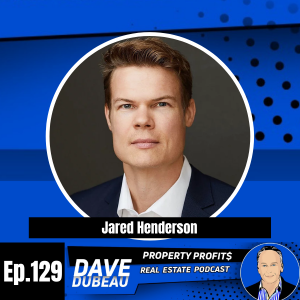
Jared Henderson lives in Montreal and started investing in real estate in 2012. He now focuses on cash-flowing student rentals in Peterborough and only invests in Ontario.
In this episode, Jared shares about the cash flow opportunities in student rentals versus single-family rentals. The odds of a vacancy in student rental property are slim compared to a single-family rental property.
Topics Covered:
01:06 – What his primary investment strategy
01:41 – Why choose a small city in Ontario for his investments and not in his own city
04:50 – Why he continues to invest in Peterborough and not in Montreal
07:13 – Are his properties pre-existing student rentals or single-family homes converted as student rentals
09:04 – What is a sweet spot in terms of the number of rooms for cashflows
09:53 – How is his student rental set-up – co-ed or all-male or all-female
10:32 – What good property management can do with cleanliness and orderliness
11:41 – How long is the tenancy for student rentals
13:11 – Is he catering to international students and how advantageous is it in having them over local students
14:32 – How does he raise capital to buy properties
15:20 – How much does he get having the place as student rental versus renting it as a family home
16:43 – The advantage of having student rentals versus renting out the place as a family home
Key Takeaways:
“What really attracted me to the student rental model is that I have multiple leases in these houses. I would never be without any revenue altogether. Worst case scenario is these days I’m perhaps half full or four out of six students are there. I’m always receiving a steady flow of cash which provides my business stability.” – Jared Henderson
“The reason why I continued investing in southern Ontario instead of Montreal is because of the strong fundamentals in the GTA, through transportation development, job formation, and migration.” – Jared Henderson
“If the student population dries up. And there’s too much competition with investors like myself or concentrating on cash flow and filling up all these rooms, I can either do a single-family by just converting it to a nice new home, or I can duplex the building.” – Jared Henderson
“Six-beds is a sweet spot in terms of good cash flow and manageable results.” – Jared Henderson
“I aim for a year-long lease. Most of my students are at Fleming College where you’re having certain terms to be 1, 2, 3 years versus typical University, which would be four years. So, with these shorter periods of time, I do have a little bit more turnover.” – Jared Henderson
“I’ve had success filling out my homes in the summer they would be slightly less occupied. But we’re talking four to five rooms complete versus six over the summer.” – Jared Henderson
Connect with Jared Henderson:
hatleyfunds.com
E: jared@hatleyfunds.com
Instagram
Connect with Dave Dubeau:
Property Profits Podcast
www.davedubeau.com
www.investorattractiondemo.com
Facebook
LinkedIn
Enjoyed the Podcast?
Please subscribe on iTunes for updates

Friday Sep 25, 2020
Friday Sep 25, 2020
What you’ll learn in just 17 minutes from today’s episode:
Learn about the simple strategy that has served Jay well in his real estate career
Discover the tragic story that inspired him to create a business called Prepared Fathers focusing on how to build a real estate portfolio
Learn about a new project he is venturing into called Teen Finance Accelerator
Resources/Links:
http://www.theshorttermshop.com/
Summary:
After his first child was born in 2005, Jay Gabrani jumped into the world of real estate investing. Despite several challenges along the way, he built a seven-figure real estate portfolio that helped him take a multi-year sabbatical to deal with the heartbreaking tragedy when his wife passed away in 2014. Today, Jay makes an impact in raising three children and empowering families to secure their Family’s Financial Future as the founder of Prepared Fathers.
In this episode, Jay shares how his income from real estate provided him the financial cushion when he needed it the most. And in his quest to find out how millionaires become millionaires, he found that real estate was the way to go.
Topics Covered:
01:15 – The primary investment strategy that has served him well
01:58 – What does he buy and hold and why does he advocate one’s focus
03:14 – What does he do with the properties with bungalows on it that he bought
04:22 – Are they bungalows with secondary suites or are they just single-family homes
05:51 – A backstory of what his career was before real estate and what made him shift to the latter
07:15 – How his first real estate investment in Edmonton started
08:17 – What’s his name of the game when in trouble
09:53 – Making the most of joint venture when looking for capital
11:39 – Number of properties he builds with his partners and how did the investment go
12:14 – What is his business called Prepared Fathers all about
13:08 – The tragic story behind what made him start Prepared Fathers
17:51 – What this tragic story taught him and how real estate has been a financial cushion to him
19:56 – His new project: Teen Finance Accelerator – what is it all about
Key Takeaways:
“I am a strict buy and hold long-term guy. It served me pretty well. And that’s the strategy I just like. I like things simple. I find buy and hold to be simple so that’s what I tend to stick with.” – Jay Gabrani
“I had always driven to be successful. I was always rather ambitious, but I wanted to know how millionaires became millionaires. I read a whole bunch of stuff. I chose real estate.” – Jay Gabrani
“When you’re going through some trouble. Keep it rented. Keep the space full. So that’s one thing I want people to point out. It’s not always doom and gloom, even when the numbers go down if you stay rented.” – Jay Gabrani
“There’s so much money just sitting around. You should never have the excuse of, there’s no money. Because if you don’t have one, that’s fine. Partner, partner. Be resourceful. It’s not about having resources. It’s about being resourceful.” – Jay Gabrani
“I love doing the consulting and coaching so Prepared Fathers is what we’ll call an everyday business that I do.” – Jay Gabrani
“What I encourage people to do is be ready for life’s curveballs and real estate lets me be ready after that tragic and obviously, a very difficult experience I went through.” – Jay Gabrani
Connect with Jay Gabrani:
preparedfathers.com
LinkedIn
Instagram
Facebook
Connect with Dave Dubeau:
Property Profits Podcast
www.davedubeau.com
www.investorattractiondemo.com
Facebook
LinkedIn
Enjoyed the Podcast?
Please subscribe on iTunes for updates

Tuesday Sep 22, 2020
Tuesday Sep 22, 2020
What you’ll learn in just 17 minutes from today’s episode:
Find out about investment properties that give him the most profit, at the same time providing returns for his investors
Learn why forging good relationships matter when looking for good partners and investment deals
Learn about the best practices for the maintenance and the management of properties
Resources/Links:
Maintenance Man to Millionaire: Real Estate Wealth Creation for Everyday People by Glenn Gonzales
Summary:
Glenn Gonzales has been in the business for the past 30 years. He started as a building maintenance man, learned the industry, and ran his own property management company. He then purchased 4500 units and in 2018/19 he sold the majority of those units.
In this episode, Glenn talks about his wide range of experience in the maintenance and the management of properties and how that experience prepared him to eventually own his management company as well as several other multifamily units.
Topics Covered:
01:01 – His primary focus of concern as far real estate is concerned
01:19 – What he loves about the investment strategy he chose
02:49 – Why he chose to sell versus hold on for long-term before
03:16 – The transition from being a maintenance guy to buying apartments
06:48 – How he dabbles from one role to another
09:16 – The time he finally got to buy his own apartment
12:02 – How he found other deals from the first time he did
Key Takeaways:
“Part of my preference for selling versus holding on was where I was in my station in life. I wanted money in my pocket. And that was the quickest way to put more money in my pocket.” – Glenn Gonzales
“I learned a very valuable lesson of how important it is to have a good maintenance guy and a good manager. Because you can’t have a successful apartment complex without both of those people being on the same team and working together.” – Glenn Gonzales
“For 25 years, I navigated through property management with several different management companies. And along the way, I was just getting more and more and more experience for sure, what to do and what not to do.” – Glenn Gonzales
“Getting 4,500 units, it’s not that simple, but yes, relationships and being in the right place and the track record to experience the 25 years in the trenches, so to speak, it gave me the experience because I could tell what was a good deal from what was a bad deal.” – Glenn Gonzales
Connect with Glenn Gonzales:
obsidiancapitalco.com
LinkedIn
Connect with Dave Dubeau:
Property Profits Podcast
www.davedubeau.com
www.investorattractiondemo.com
Facebook
LinkedIn
Enjoyed the Podcast?
Please subscribe on iTunes for updates
Friday Sep 18, 2020
Friday Sep 18, 2020
What you’ll learn in just 17 minutes from today’s episode:
Find out what Real Numberz is all about and how it helps organize your investments
Find out how to test run real estate without having so much risk and earn a decent potential of return
Learn why you have to trust your partners but still verify
Resources/Links:
realnumberz.com
Summary:
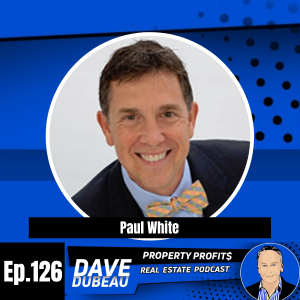
Dr. Paul White is a former orthodontist and best-selling author turned real estate investor. With his son Trey managing his own investments, Dr. Paul created Real Numberz, the only comprehensive app in the real estate industry for investors with diverse portfolios of assets.
Dr. Paul believes the key to achieving financial freedom has as much to do with optimizing your existing investments as it does to acquire more of them. The mission of Real Numberz is to revolutionize the passive real estate investor experience, empower individual investors to control their investments rather than letting their investments control them, and give any real estate investor, no matter their level of experience, the tools they need to achieve their freedom with less time, effort, and anxiety.
In this episode, Dr. Paul shares what made him shift from dentistry to real estate. You will find out how he developed a business software that helps organize all your investments even when he, himself is not a programming whiz. Learn about his multiple real estate investment strategies that made him successful all these years.
Topics Covered:
00:43 – What’s the shift all about from being a dentist to becoming real estate investor
01:09 – How long has he been with being a dentist before finally jumping into real estate
02:48 – What investment strategy he invested in the beginning
03:31 – What multiple real estate strategies is he into now
04:16 – What is Real Numberz all about
07:00 – The advantage and disadvantage of doing real estate actively versus passively
08:36 – Trusting but at the same time verifying
09:46 – How to test the waters in real estate without having too much risk
11:08 – How was he able to do everything in Real Numberz even if he’s not a programming guy
Key Takeaways:
“The realization, I guess Warren Buffett said it best, he said, ’If you don’t make money while you sleep, you’ll work till you die.’ And that was sort of a wake-up call for me, and that started my journey to alternative investments.” – Paul White
“I think what Reagan said a long time ago, ‘Trust but verify,’ is sort of the mantra that I would sing to all of them.” – Paul White
“Most investors make the mistake of just handing people money and never going to the site or never having to pay somebody to drive by to see if it’s there. Or anything else about the operator, and talking to other investors that have worked with them. Maybe you have done a background check on those people. There’s a lot that needs to be done because it’s a lot of money that you’re usually putting out there.” – Paul White
“I think the best thing you can do is a partnership, either with a seasoned investor or a seasoned operator, maybe rehabbing and renting a house together, so everything sort of split it, you can even do the same thing with some private lending as well.” – Paul White
“You know what, I’ve done a lot of syndications over the years and I will tell you, the operators that don’t have any money in the game makes me nervous.” – Paul White
Connect with Paul White:
realnumberz.com
Facebook
Connect with Dave Dubeau:
Property Profits Podcast
www.davedubeau.com
www.investorattractiondemo.com
Facebook
LinkedIn
Enjoyed the Podcast?
Please subscribe on iTunes for updates
Tuesday Sep 15, 2020
Tuesday Sep 15, 2020
What you’ll learn in just 17 minutes from today’s episode:
Learn about the biggest benefits of rehabbing and wholesaling real estate
Find out what it is about wholesaling that appeals to most people as an investment strategy
Discover low-cost ways of finding deals
Resources/Links
Flip Hacking Live
Facebook Group
7-Figure Flipping
Summary:
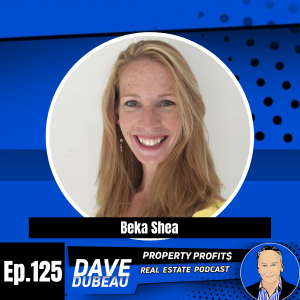
Beka Shea is a former Navy Mechanical Engineer Officer. She started real estate rehabbing full time in 2013 after which she laid the foundation to grow her real estate investments by Scaling. She’s rehabbed 60 houses, wholesaled 120 deals, and has 12 rentals. She now works full time with the company 7-Figure Flipping (https://7figureflipping.com) guiding accountability groups and member success.
In this episode, Beka shares what her transition was like from Navy Officer to Real Estate Investor, how she dabbled in rehabbing and wholesaling real estate, and finally what made her decide to devote herself full time to rehabbing real estate. What was it in rehabbing real estate that got her so focused on it?
Topics Covered:
01:25 – Beka defines what is rehabbing and wholesaling
02:18 – The biggest benefit to rehabbing properties
03:39 – How was the transition from being a Navy officer to real estate
04:57 – What is wholesaling and what are the benefits of getting into it
05:58 – What appeals to most people about wholesaling
07:26 – How was it like juggling between rehabbing and wholesaling properties
08:20 – Talking about working full-time rehabbing
10:00 – Low-cost deals for finding deals
12:38 – How she put up capital for her rehab deals
14:11 – How does she secure her investors’ money
15:11 – Typical price point for her property deals
16:37 – What is Seven-Figure Flipping Mastermind
Key Takeaways:
“After doing a whole bunch of investing, I would say to your audience that I have noticed there’s a tendency of what type of people do better in which arena.” – Beka Shea
“Rehabbers tend to have this project management bent. You see a lot of former accountants, engineers, contractors who do really well in the rehabbing space and I think it’s because they like breaking things down into the process.” – Beka Shea
“Managing the process, wholesalers as people assign deals. They tend to love the art of the deal.” – Beka Shea
“I personally love the rehabbing side of things, taking something that other people would view as just broken down and worthless and being able to see the potential in it and then unlock that.” – Beka Shea
“So, wholesaling to me is a sales marketing company. I think a lot of people get into marketing, they often talk about them, like, you know, me, me, me, I buy houses, I fix houses, the sellers don’t care. They want to know how are you going to make their lives better. So, it starts with the marketing piece.” – Beka Shea
“What is it with wholesaling that people like it so much as an investment strategy? It’s fast. And if you’re good at making deals and you recognize your value, I mean, there is a lot of money to be made.” – Beka Shea
“When I wanted to start scaling my business, I joined a mastermind, which is a really cool way to get around people doing more to get out of just your local market and be exposed to people doing stuff on a greater scale.” – Beka Shea
Connect with Beka Shea:
Facebook
Instagram
YouTube
Connect with Dave Dubeau:
Property Profits Podcast
www.davedubeau.com
www.investorattractiondemo.com
Facebook
LinkedIn
Enjoyed the Podcast?
Please subscribe on iTunes for updates

Thursday Aug 27, 2020
Thursday Aug 27, 2020
Learn about a real estate investment that has survived COVID 19’s harsh effects and still makes cash flow margins every single month, find out investment strategies that will cost you the least amount of risk, as well as money, and discover about the marketing strategies he employed to get his units filled with renters even amidst the pandemic.
Resources/Links
https://www.therealsystem.com/get-access
Summary:
Jorge Contreras is a real estate investor and a coach with 15 Airbnb that has a 6+ figure annual cash flow.
In this episode, Jorge shares how he has pivoted in his Airbnb deals during these weird times without running out of cash flow every month. He also shares about his Airbnb strategy which gives you zero risk and costs nothing if a deal goes sideways.
Topics Covered:
01:03 – How has the pandemic affected Airbnb market
05:19 – Three strategies to go with Airbnb
06:58 – Which strategies does he recommend for most people
07:52 – Why does he not recommend the leasing and subleasing strategy
09:49 – Describing a scenario when a subleasing deal has gone bad
11:37 – Some Airbnb tips from Jorge
14:05 – Is a longer-term rental still permissible after laws prohibiting Airbnb takes place
Key Takeaways:
“How do we make adjustments now to bring more eyes to our short–term rental portfolio? And so, we started marketing our properties on websites that market to corporate housing, and nurses who are traveling for work for COVID to work at hospitals.” – Jorge Contreras
“We started bringing down the pricing where we started to attract locals who were living, say near downtown LA in tiny little apartment spaces where they had no social distancing and they were going down the elevator or something and they wanted to rent a single-family home with some space.” – Jorge Contreras
“Between the staycation, there’s the corporate housing and the nurses, we actually made less money, a lot less money. But we were still making some small profit cash flow margins every single month, even during the worst month of March and April.” – Jorge Contreras
“I believe that co-hosting is a great way to get your feet wet. You also learn management, marketing, customer service. It’s a great way for people that want to get into real estate investing, but don’t have a ton of money.” – Jorge Contreras
“As an investor, we always look at how can I make the most amount of money with the least amount of risk and the least amount of money and the best I did is co-hosting.” – Jorge Contreras
Connect with Stuart Grazier:
Instagram
Facebook
YouTube
Connect with Dave Dubeau:
Property Profits Podcast
www.davedubeau.com
www.investorattractiondemo.com
Facebook
LinkedIn
Enjoyed the Podcast?
Please subscribe on iTunes for updates

Monday Aug 24, 2020
Monday Aug 24, 2020
Discover about driving distance properties and what makes them COVID 19 threat resistant, find out which properties provide Avery the highest ROI and efficiency, and learn how to invest in Airbnb, and have everyone do it for you while you manage remotely without costing you 20% to 40% of your gross.
Resources / Links:
theshorttermshop.com
Summary:
Avery Carl bought her first rental property at age 26 on a 37,000 salary. Through strategically investing in short-term rental properties in mature vacation rental markets, she was a millionaire by 31. She now owns a portfolio of 24 properties and is the CEO and founder of the Short Term Shop, a real estate team that helps investors acquire short term rental properties in the most recession-resistant markets, and trains them on the methods that led her out of the corporate rat-race and into financial freedom.
In this episode, Avery shares about the very reason she focuses on the short-term rental properties and how this portfolio survived the pandemic’s repercussions. She also talks about investment properties you can take part in depending on the price and ROI range that works for you and how to manage short-term rental properties remotely without losing almost half of your gross profit to expenses.
Topics Covered:
01:43 - How is COVID 19 affecting her short-term rentals portfolio
05:58 - What got her into short-term rentals and what made her focus on this strategy
09:32 - What types of properties are set up for her short-term rentals
10:02 - What price points can investors look into
12:27 - How are her properties grossing in income on a comparison of standard rental versus
short-term rentals
13:15 - Net income you get after all the expenses, management fees including mortgage
13:39 - Mistakes people in the early stage of short-term rentals commit
14:48 - Does she work with foreign investors
Key Takeaways:
“We have seen a boom in the drivable vacation rental market because people are busting to get out of the house, but they don't want to get on a plane.” - Avery Carl
“And they don't want to go somewhere like Disney, or even just a big metro area where they're going to be around a lot of people. They're all driving to the vacation areas that they can get to in their cars. We're actually seeing higher prices per night than we ever have, even on holidays.” - Avery Carl
“The regional drivable markets have bounced back in full force, the metro markets Nashville, still struggling a little bit down the road. The bigger cities where there's still a lot of lockdowns struggling as well.” - Avery Carl
“In the Smokies, condos don't really work. The tourists want to stay in cabins, they want the mountain experience whereas if you go down to Florida, condos are totally okay. People love condos on the beach. You kind of have to pay attention and do some research on what's expected.” - Avery Carl
“With single-family, it's not really a one-size-fits-all, which is a really good thing about this investment strategy is that nobody is priced out. There's not a lot of barriers to entry, like say with multifamily. Newbies or really experienced investors can find a price range and ROI range that works for them.” - Avery Carl
“If you're self-managing, two people can gross the same exact thing and have wildly different nets, just depending on how they manage. But with a mortgage, you should be able to net roughly 40% of your gross in your first year. As you get better reviews, you'll be able to raise your prices and you can do better than that. But to start you're looking at right around 40%.” - Avery Carl
“Analysis paralysis is the worst thing that any investor of any type can do to themselves.” - Avery Carl
Connect with Avery Carl:
theshorttermshop.com
LinkedIn
Twitter
Facebook
Connect with Dave Dubeau:
Property Profits Podcast
www.davedubeau.com
www.investorattractiondemo.com
Facebook
LinkedIn
Monday Aug 10, 2020
Monday Aug 10, 2020
Discover how a real estate investment company’s business philosophy can allow them to not just earn money, but also fulfill their social responsibility, find out which investment strategy Stuart and his partner focus on to bring in steady cashflow in a short period of time, and learn about which investment strategy military men and busy professionals can use to earn passive income every single month.
Resources/Links
Filling the Storehouse Podcast
Summary:
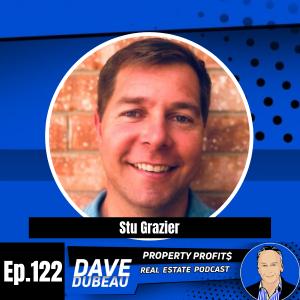
Stuart Grazier is an active duty Navy pilot who has served 18 years in the US military. Starting in June of 2018, his company Storehouse 3:10 Ventures has acquired and sold approximately 50 turnkey rental properties, averaging 2-4 properties per month, where they are providing rehabbed, cash flowing rental properties to their network of military/veteran and patriot investors.
In this episode, Stu shares the purpose for which their company came to be aside from replacing their military income when retirement comes. He also talks about investment opportunities military men and busy professionals can invest in to earn passive income without them directly managing properties. How he teaches investors which model to follow depending on their goals.
Topics Covered:
01:19 – How he got started in real estate
02:13 – The story behind their company called Storehouse 310 Ventures
03:32 – Their primary real estate focus and their target market
05:05 – What market do they buy their properties from and the primary reason they chose that market
07:34 – What roles do Stu and his partner play in the company, and how do they run their business from a distance
09:26 – Where and how do they find deals
11:24 – Why turnkey property investment is good for people in the military and busy professionals
13:35 – Which type of investments do most military men are interested in
15:20 – How one’s goal during retirement determines which turnkey strategy to invest in
16:13 – What his single-family type transactions look like
Key Takeaways:
“We pick Wisconsin for our properties because it’s a great cash-flowing market. The Midwest has great cash flow markets in general. It’s very affordable to live, so the price to rental index, makes for that great cash flowing rental properties.” – Stuart Grazier
“In finding properties, we’ve created some great relationships with wholesalers, we’re pretty much on every single buyer’s list. We’re in all the Facebook groups and the local Ria meeting groups and stuff like that.” – Stuart Grazier
“We don’t do a whole lot of direct mail marketing or direct to seller type marketing yet, we really haven’t needed to because we’ve just gotten on everyone’s buyers’ list and we’ve gotten a great deal flow that way.” – Stuart Grazier
“Most of our investors are very early investors, it’s their first time that they’re going to buy a rental property, we’re trying to teach the model of long term buy and hold assets, where over the long run is going to provide solid cash on cash return and bringing that positive cash flow every single month.” – Stuart Grazier
“What we’re teaching is, you buy one house, its cash flows, you buy two houses, that’s cash flows, and you can kind of turn this into a little mini-empire if you will, and you’re holding these properties, your tenants are paying off your mortgage for you.” – Stuart Grazier
Connect with Stuart Grazier:
www.storehouse310turnkey.com
Facebook
Instagram
YouTube
LinkedIn
Connect with Dave Dubeau:
Property Profits Podcast
www.davedubeau.com
www.investorattractiondemo.com
Facebook
LinkedIn
Enjoyed the Podcast?
Please subscribe on iTunes for updates

Thursday Aug 06, 2020
Thursday Aug 06, 2020
Find out what made Mark focus on multifamily properties instead of single-family homes, learn about an effective marketing strategy to use when looking for investor partners, and discover how an underperforming property can be made into a well-oiled machine bringing in steady cash flow and a big uptick in value.
Resources/Links
FREE Webinar: https://bit.ly/WEBINAR_R_07APR20
FB Group: https://www.facebook.com/groups/ApartmentBuildingInvestorsNetwork/
Summary:
In 2015, Mark Baltazar founded Peak Property Investments, a boutique firm helping passive investors generate returns through real estate – hands-free. In 2018, he co-founded Peak Multifamily Investments as an extension to bring a greater focus to acquiring and managing apartment building investments. Through coaching and passive investing opportunities, Mark works with time-starved investors to help them take action and get past the hurdles that many face along the path to financial freedom.
In this episode, Mark shares how he’s done deals in multifamily properties, focusing on underperforming assets and turning them around and increasing their ROI, values, and cash flow.
Topics Covered:
01:46 – Benefits of focusing on 12 to 20–unit size properties
04:54 – How does he find deals in multifamily properties
07:50 – A walkthrough of the deal he has done a few years back
13:10 – The advantage of getting deals from a network of agents
14:33 – How does he find investor partners to raise capital
17:16 – How does he structure the deals when working with investor partners
18:02 – Who helps qualify for financing
Key Takeaways:
“For apartment buildings, as an investor, as an operator, you have a little more control in terms of what you can do from a valuation standpoint, increased net operating income and the value of your building goes up.” – Mark Baltazar
“With apartment buildings undervalued, you’re almost paying a premium for things that are under-managed because of the upside.” – Mark Baltazar
“One of the components of multifamily that I really understood is, you put $1 in, you increase your net operating income by $1. Your valuation is a multiple of that.” – Mark Baltazar
“It’s a combination of content marketing and education, that’s a big part of how we’re attracting partners.” – Mark Baltazar
Connect with Mark Baltazar:
PeakMultifamily.ca
Facebook
Connect with Dave Dubeau:
Property Profits Podcast
www.davedubeau.com
www.investorattractiondemo.com
Facebook
LinkedIn
Enjoyed the Podcast?
Please subscribe on iTunes for updates