Listen on:









Episodes

Tuesday Nov 10, 2020
Tuesday Nov 10, 2020
What you’ll learn in just 17 minutes from today’s episode:
Learn how to reach out, confront, and make your fears disappear to be effective as a real estate investor
Learn to overcome the 7 roadblocks to asking questions to become a bold asker
Find out the three channels through which to ask to have a reflective journey
Resources/Links:
Join the ASK – the book club for FREE. Click here: http://askthebookclub.com/
Summary:
Mark Victor Hansen is a Worldwide Best-Selling Author, America’s Ambassador of Possibility, Speaker, Philanthropist, and Humanitarian.
Crystal Dwyer Hansen is an international speaker, researcher, corporate consultant, author, and entrepreneur. Her expertise is in the field of human potential. Through her years spent as a Transformational Life Coach, and Wellness/Nutrition Expert, she has seen people experience profound and lasting transformation in relationships, career, health & wellness, by tapping into their own inner resources. Having personally guided people from seemingly impossible states of depression, anxiety, and hopelessness—to triumph, freedom, and happiness, is what drives Crystal’s conviction that all people have unlimited potential for greatness if they only understand how to access those resources.
In this episode, Mark and Crystal zero in on the importance of asking questions. When you ask the right questions, you will be able to draw out their pain points, and what they want to be done, thus, helping you serve your clients better. A person who asks questions is perceived to be likable and likely to be the one who gets the best deal every time.
Topics Covered:
01:52 – Raving about the power of asking
03:19 – How does the skill of asking the right questions applicable to real estate investors
08:37 – The roadblocks to asking questions
11:03 – The need for self-awareness to crush those fears
15:01 – What tiny steps you can do to overcome your fear of asking questions
15:23 – Reach out, confront, and make your fear disappear
Key Takeaways:
“If you really want to create a bond with your clients, you need to use the art and science of asking by figuring out who they are and what they want.” – Crystal Hansen
“A lot of us never really take the time to ask questions. And they’re so important because that’s the architecture for your future, people allow themselves to just so randomly wake up and live their life without sculpting.” – Crystal Hansen
“Sometimes we just need to learn to kind of step on our fear, get that awareness of, of what the reality is, it’s like people aren’t ready to reject you.” – Crystal Hansen
“One study done by Harvard is that people who ask more questions are perceived to be more likable, that is both in business relationships and personal romantic relationships.” – Crystal Hansen
“Get to know what drives Because if you don’t take the time to ask people questions, you’ll never understand how to serve them.” – Crystal Hansen
“We’ve been very blessed to travel to 80 countries around the world, met great people that are nice, wonderful, well- educated, talented, sophisticated. But the difference between those who succeed a little, and those who succeed a lot, we discovered as one thing and one only, and that is to have the ability to ask, which we now call becoming a master asker.” – Mark Victor Hansen
“The sense of unworthiness, all of us have to overcome it.” – Mark Victor Hansen
“In order to overcome shyness, what they need to do is, first of all, interrogate themselves and ask themselves questions, and then find somebody to bond with, somebody to practice with.” – Mark Victor Hansen
Connect with Mark Victor:
marcvictorhansen.com
LinkedIn
Facebook
Twitter
Instagram
Connect with Crystal Hansen:
LinkedIn
Connect with Dave Dubeau:
Property Profits Podcast
www.davedubeau.com
www.investorattractiondemo.com
Facebook
LinkedIn
Enjoyed the Podcast?
Please subscribe on iTunes for updates
Friday Nov 06, 2020
Friday Nov 06, 2020
What you’ll learn in just 17 minutes from today’s episode:
Find out about the strategy Daniel devised to get started and buy his first deal
Learn how he grew his portfolio in a very short amount of time
Learn about the mindset of a true investor and entrepreneur
Resources/Links:
Get a FREE copy of Daniel Kwak’s book: 0 to 75 Units in 1 Year. Click here: https://0to75units.com/book-order
Summary:
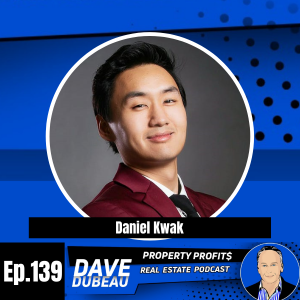
Daniel Kwak immigrated to the USA at the age of 5. He had a negative $187.65 in bank account at the age of 19 and had 87 doors by the age of 23.
In this episode, Daniel shares how he started poor and with his big dreams of owning an NBA team, pushing him to seek an opportunity outside of a nine to five job. He found it in real estate – which he believes is the ticket to his dream. At the moment he is busy growing his portfolio, which he actually grew big in so short a time, after buying his first deal. He talks about strategies on how to raise capital and the mindset you need to make it big in real estate.
Topics Covered:
01:03 – A backstory of his childhood background
02:23 – What got him started in real estate
04:20 – What was his first deal when he started and what did it progress to
06:18 – How he syndicated funds to start buying his first deal
07:46 – A sibling real estate partnership
08:24 – Why should you first find what your value propositions are
10:04 – How he grew big quickly his portfolio right after his first deal
11:54 – How he transitioned from single-family to multi-family homes
13:25 – How does his portfolio look like now
Key Takeaways:
“Real estate investing is a very viable and phenomenal way of building wealth.” – Daniel Kwak
“Right now, I’m more focused on recruiting potential passive investors. Because I think there’s a lot of things up in the air right now. And I don’t think it’s a great time to buy. Others may see it from a different standpoint, but just based on my opinion, and the research I’m doing and the people I’ve talked to, I don’t think it’s a great time.” – Daniel Kwak
“For the short term for us, it’s organizing and raising capital, focusing on education. And in about six months, we’re looking to be a little bit more aggressive with purchasing multifamily.” – Daniel Kwak
“I’d recommend a lot of people take that route. It’s a very unpopular route. I spent three years shadowing people, learning, buying every single possible course I could on real estate, reading as many books and podcasts and it paid off for me. That first deal was a portfolio, four single-family houses.” – Daniel Kwak
“I found a very interesting way to create win-win scenarios where individuals would invest in deals that I would find through other individuals. And I would pretty much syndicate the funds and do put a lot of the sweat equity.” – Daniel Kwak
“I always recommend finding out what your value propositions are. And what a value proposition is, the two to three things that you do very, very well. You can write down, sit down, and have a list of three, five things, maybe even nine to 10 things that they enjoy doing that they’re good at. And they can formulate their blueprint on how to scale their portfolio around that.” – Daniel Kwak
Connect with Daniel Kwak:
thekwakbrothers.com
Facebook
YouTube
Connect with Dave Dubeau:
Property Profits Podcast
www.davedubeau.com
www.investorattractiondemo.com
Facebook
LinkedIn
Enjoyed the Podcast?
Please subscribe on iTunes for updates
Tuesday Nov 03, 2020
Tuesday Nov 03, 2020
What you’ll learn in just 17 minutes from today’s episode:
Learn about the pitfalls of having a funding source as a bank
Find out about the advantages of financing options via private lenders over banking institutions
Find out the mistakes to avoid when using private money lenders
Resources/Links:
Get your FREE 7 Steps to Guaranteed Hard Money Loan Approval. Click here: https://hardmoneybankers.com/
Summary:
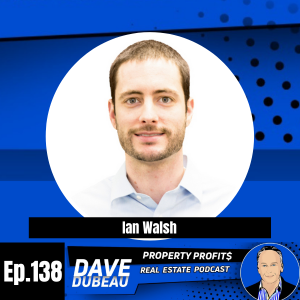
Ian Walsh is a partner at Hard Money Bankers PA. As a managing partner, he is always looking to lend money to investors in the Eastern Pennsylvania and Southern New Jersey market. Lending is a passion and being creative to make the loan work for the borrower is always exciting. It does not matter if it is a construction and acquisition loan, a construction loan or a refinance, he always tries to find a way to make it work. In this episode, Ian shares how hard money lenders or private money lenders, provide fast and flexible lending solutions to real estate investors; approving loans in as fast as 24 hours.
Topics Covered:
00:44 – What investment strategy he started with
02:07 – Hard money lending and different financing options available for real estate investors
03:28 – How does a private money lender differ from a bank
06:21 – Hard money lender versus private money lenders
10:23 – How were they able to raise $40 million dollars to loan out
12:00 – Mistakes real estate investors commit when they go to private money lenders
Key Takeaways:
“Private and hard money is getting to be a lot more flexible, we’re about speed. We’re about analysis, quick analysis on the property first. And that’s closing in 24 hours.” – Ian Walsh
“Bankers are not investors first by nature, which means they’re underwriting you rather than your deal. They’re not really fit for our space because my space is built on investment properties, I have to underwrite the property first and then borrow and when you do that in reverse you miss the essence of what private lending and hard money lending is and you run into trouble.” – Ian Walsh
“If you’re calling a private lender, know your numbers. Even if you’re new, which is fine. When they come in, research and understand their values, they understand what a house is truly worth on the back end.” – Ian Walsh
Connect with Ian Walsh:
hardmoneybankers.com
LinkedIn
Facebook
Twitter
Instagram
Connect with Dave Dubeau:
Property Profits Podcast
www.davedubeau.com
www.investorattractiondemo.com
Facebook
LinkedIn
Enjoyed the Podcast?
Please subscribe on iTunes for updates
Friday Oct 30, 2020
Friday Oct 30, 2020
What you’ll learn in just 17 minutes from today’s episode:
Find out how to rake in not only cash flow but build real wealth from your properties
Learn how to weather-proof your real estate business in any economic turn of events
Find out Sensei’s learning experiences in real estate that you can learn from to avoid making the same mistakes in your real estate
Resources/Links:
For a FREE consultation about your ROI Calculator click here and send us an email: https://blackbeltinvestors.com/contact/
Summary:
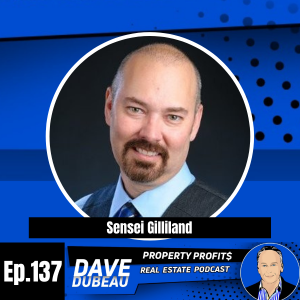
Sensei Gilliland of SoCal is the founder of Black Belt Investors. In 1995, he began his investing endeavors. Since that time, Sensei has created cash through wholesale real estate, obtained wealth through rental properties, and continues to teach his methods through educational events helping people to achieve their financial dreams.
In this episode, Sensei talks about the three arms of his real estate business focusing on education, consulting, and investing. Where learning experiences are concerned, one thing he emphasizes is the need to be ready to adapt to changing markets as this is the key to your business continuity. He shares investment strategies that has him not only getting a steady stream of cash flows from but also truly is providing wealth for him and his investors.
Topics Covered:
01:30 – From martial arts to real estate – the birth of Blackbelt Investors
03:38 – How delegation let him juggle between his many businesses
05:25 – The three arms of his real estate business
06:06 – What his primary bread and butter is
09:40 – What kind of properties does he buy and hold
10:46 – How does his service ‘Remote Rehab’ work
12:38 – Learning lessons from his real estate journey
17:25 – The two ways he’s building his rental portfolio
Key Takeaways:
“I figured out this one thing, and that is, real estate controls all businesses.” – Sensei Gilliland
“When you’re a fix and flipper, you abide by a certain type of criteria, number one is affordability.” – Sensei Gilliland
“I was all about buy and sell, but there’s a point, you can’t be wealthy buying and selling property.” – Sensei Gilliland
“I’m not your commercial investor, I’m residential, strictly residential. By far, it’s like playing Monopoly. If you guys have ever played, you buy cheap properties, the cheap properties that make dollar sense with a good exit strategy, and those are typically houses.” – Sensei Gilliland
“Most of our investors buy houses because they’re easy stepping stones, and also offer the best exit strategies.” – Sensei Gilliland
“I don’t invest in areas just for cash flow, I can find that anywhere, I can find cheap properties that cash flow anywhere, for me and for my clients, I want to make sure that we get the most bang for our buck. And so, I seek out undervalued markets that have the potential to grow.” – Sensei Gilliland
“When you put the ingredients of cash flow, appreciation, tax benefits, that’s the combination needed to build wealth.” – Sensei Gilliland
“I found that many made the mistake not knowing how to adapt to the market. And for me, that was a learning lesson.” – Sensei Gilliland
“My business tanked because I wasn’t ready to adapt to changing markets. You don’t need to be a master in one niche. I say master one niche and when you’ve mastered it, add on another master’s degree in that real estate niche, because you don’t want to be a jack of all trades and a master of none.” – Sensei Gilliland
Connect with Sensei Gilliland:
www.blackbeltinvestors.com
Facebook
Twitter
Instagram
YouTube
LinkedIn
Connect with Dave Dubeau:
Property Profits Podcast
www.davedubeau.com
www.investorattractiondemo.com
Facebook
LinkedIn
Enjoyed the Podcast?
Please subscribe on iTunes for updates

Tuesday Oct 27, 2020
Tuesday Oct 27, 2020
What you’ll learn in just 17 minutes from today’s episode:
Learn how to become a great landlord
Find out the mistakes most landlords commit to prevent tenant conflicts from arising
Find out how to screen tenants better to avoid serious issues with them
Resources/Links:
Landlord by Design: Complete Guide to Residential Property Management by Michael Currie
Summary:
Michael Currie is a landlord and property manager from Canada. He had been flipping houses from 2001 until 2009 when he, his wife, and a close friend formed The Fort Nova Group Limited. Since 2009, they have been using a buy/hold investing strategy, and, with the exception of a couple of income property flips, have been building an investment portfolio. Michael has extensive experience working with contractors, tradespeople, project managers, property managers, and tenants to make renovations as non-disruptive as possible.
In this episode, Michael shares how he went from flipping properties to finally become a landlord to many properties. As soon as Michael got involved in buy and hold investing, he saw a need for property management education. He started a mission to educate and assist independent landlords all over the world with his blog. In addition to Michael’s hands-on property-management experience, he created a manual that shows the how-to in repairs and maintenance. Tenant management was also part of what he blogs about as there are issues that came up with his tenants and other landlords may resonate with.
Topics Covered:
01:52 – Getting better at being a landlord and all the issues surrounding it
06:34 – Biggest mistakes that are often seen in property management and tenant management
09:21 – How to handle tenant-from-hell scenarios
11:12 – How to avoid issues with tenants
12:53 – How to screen better your tenants
13:31 – Why you need to look up your tenants’ credit report
Key Takeaways:
“No one really talked about what it actually means to manage a property and negotiate with tenants and negotiate with contractors and just a lifelong customer experience.” – Michael Currie
“Where I see people get into trouble is, they tend to either to buy the book, and they’re afraid of either breaking the rules, or they’re afraid of negotiating out or having what they may consider confrontation and not realizing that it’s a customer service business. Without the tenants, we have no revenue.” – Michael Currie
“I think that you really need to not take it personally and look at the best interest of your company and the tenant, and how it’s going to work out best for both parties and make it a win-win.” – Michael Currie
“To avoid tenant issues, clearly you need to have tenant screening, any place tenants by a landlord that people are in trouble with, it generally can be traced back to the screening because the first thing I ask is,’ send me over the original application when you approve this tenant.” –Michael Currie
“For reference checks, we always do a credit check. That’ll tell you if they might have omitted a place that they were evicted from or had a bad experience, that’ll show up on a credit report.” – Michael Currie
Connect with Michael Currie:
www.landlordbydesign.com
Facebook
Twitter
LinkedIn
Connect with Dave Dubeau:
Property Profits Podcast
www.davedubeau.com
www.investorattractiondemo.com
Facebook
LinkedIn
Enjoyed the Podcast?
Please subscribe on iTunes for updates

Friday Oct 23, 2020
Friday Oct 23, 2020
What you’ll learn in just 17 minutes from today’s episode:
Find out the investment strategy that has given Kevin steady cash flow and an appreciation advantage with the property
Learn about the benefits of focusing on rent-to-own properties
Find out the pitfalls you should avoid in dealing with a rent-to-own investment strategy
Resources/Links:
waypointproperties.ca
Summary:
For the past 10 years, Kevin McHardy has built a steady love for real estate through focusing completely on relationships. Whether it’s helping families proudly move into their first Rent-to-Own home, or reporting significant returns to their growing team of investors, or learning from like-minded leaders in the industry, it’s the people that make his work matter. In this episode, Kevin shares about his rent-to-own investment strategy and how he structures deals around them. Creating benefits for both the investor and the tenant-buyer at the same time, and taking the worries off of the property management, as it is taken care of by the tenant.
Topics Covered:
00:57 – How he transitioned from an airline pilot to real estate investing
01:42 – What is a rent-to-own investment strategy and how does he structure deals of this type
04:33 – Giving an idea of what a wholesale version of rent-to-own is
07:15 – Benefits for tenant-buyers for doing ren-to-own
09:48 – Advantages to rental operators of rent-to-own properties
10:47 – Price points consideration of properties in the area he is focused on and its typical terms
11:52 – What rental cash flow difference you get doing the rent-to-own versus having the house as a rental property
13:24 – What are the dangers of the rent-to-own strategy
16:56 – The advantage of getting outside credit coaches
Key takeaways:
“The benefits for tenant-buyers of our program is, they’re picking the house and we’re buying it right for them, they’ll know their set purchase price. That’s a great scenario and the rents won’t increase.” – Kevin McHardy
“As a rental operator the benefits for us would be obviously great, great, great returns of monthly cash flow is a big one and also the sale price so there’s a good amount of built-in appreciation so we know the sale price at the end” – Kevin McHardy
“We’ve got a third-party company work outside of our mortgage. Depending on their credit score (tenant-buyer), we’ll set them up and we’ll build that cost into the programs to help them out to really make sure that we can achieve the homeownership at the end.” – Kevin McHardy
Connect with Kevin McHardy:
waypointproperties.ca
Facebook
Instagram
Connect with Dave Dubeau:
Property Profits Podcast
www.davedubeau.com
www.investorattractiondemo.com
Facebook
LinkedIn
Enjoyed the Podcast?
Please subscribe on iTunes for updates
Tuesday Oct 20, 2020
Tuesday Oct 20, 2020
What you’ll learn in just 17 minutes from today’s episode:
Learn what a BHIR strategy is and how to fully leverage it
Learn how to buy turn-key properties, increase the value and sell them for higher returns
Learn how to find capital for your deals without digging into your own pocket
Resources/Links:
tysoullinvestor.com
Summary:
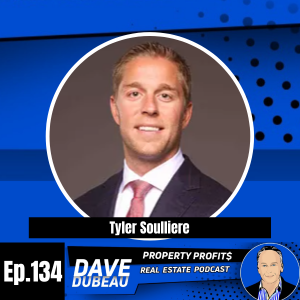
Tyler Soulliere is the President and Founder of TySoull Investor, which invests in Real Estate in the Windsor and Essex County Area in Ontario, Canada. They specialize in developing properties in Windsor, and Tyler is the CKO of TySoull Educator, a company that teaches others how to invest in real estate.
In this episode, Tyler shares his real estate strategy that provides cash flow throughout the years; How to increase the value of your property over time and sell it for higher profits.
Topics Covered:
01:10 – How he started out in real estate and what his main focus at this time
03:31 – How he focuses on being a realtor and real estate investor-entrepreneur
04:10 – What properties are giving him the cash flow these days
06:10 – The highs and lows of flipping properties
08:29 – What is a BHIR method strategy he’s focusing into now
12:14 – On being named the Canadian Real Estate Wealth magazine investor of the year a few years ago
14:59 – How he gets capital for his deals
Key Takeaways:
“As I kept flipping a couple of properties here and there, I started looking at the bigger picture, why always depend on a big payday when I could just slowly get out of the solid real estate to then have passive income from rental properties.” – Tyler Soulliere
“If you keep flipping properties, it’s not really a passive income, it’s always active.” – Tyler Soulliere
“If I can increase the income, I can increase the value and that’s kind of my strategy. I actually called it the BHIR method, the Buy, Hold, Improve, and Refinance method.” – Tyler Soulliere
“Because I found renovating any properties expensive, contractor. trades, labor materials are all getting more costly. So, then I look for this kind of almost hidden gems that I don’t need to do any work, they’re turnkey when I buy them.” – Tyler Soulliere
Connect with Tyler Soulliere:
tysoullinvestor.com
LinkedIn
Facebook
Twitter
YouTube
Instagram
Connect with Dave Dubeau:
Property Profits Podcast
www.davedubeau.com
www.investorattractiondemo.com
Facebook
LinkedIn
Enjoyed the Podcast?
Please subscribe on iTunes for updates
Friday Oct 16, 2020
Friday Oct 16, 2020
What you’ll learn in just 17 minutes from today’s episode:
Learn about how she started from scratch and rose to become a multimillionaire in real estate
Find out about the advocacy she founded to help women create wealth
Find out her main investment strategy that is credited for her real estate success
Resources/Links:
FIRE – http://www.femalesinrealestate.com/
Summary:
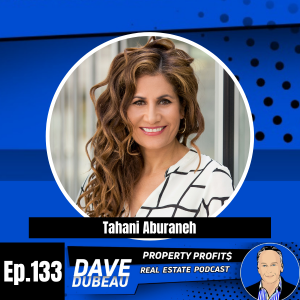
Tahani Abunareh is a best-selling author, serial entrepreneur, and real estate mogul (investor and coach). Tahani is now trailblazing a new legacy project, the first of its kind in North America called F.I.R.E, Females in Real Estate. In addition to a wider free Facebook community for women, F.I.R.E. is a movement designed for women who want to build financial independence through real estate. Tahani believes every woman deserves the right to feel financially secure and independent, and she is on a mission to champion as many women as possible.
In this episode, Tahani shares her real estate journey all the way from having nothing to becoming the multimillionaire real estate mogul that she is today. She talks about her advocacy for helping create wealth for women as she believes women have what it takes to bring impactful contributions to the real estate world.
Topics Covered:
02: 30 – How she got into the real estate space
03:42 – From a realtor to a real estate investor
05:06 – Her primary investment strategy
05:37 – The primary market she’s focusing on
06:06 – What is this Fire Movement that she started on
09:23 – Lessons learned from helping other people
10:21 – Talking about the real estate book she wrote about
11:29 – What she thinks are the challenges facing women today
13:28 – What women bring to the whole formula of real estate investing
Key Takeaways:
“I focus mostly on adding a second suite house where I bought, I fix them, but not a flip. But we add some second suites and then we just going to rent them and sometimes on odd times we flip.” – Tahani Abunareh
“Fire movement, it’s a real estate for women where I get together with women, where I teach whoever wants to learn, they can come in and I’m willing to help them learn and I teach them.” – Tahani Abunareh
“It all really stems from the belief that if you can help more people, that people will push you and will lift you up as well. And that’s what happened to me is like, I had it, I just wanted to help my clients and the more I helped, the more I got helped.” – Tahani Abunareh
“The challenges that women face is, it’s right here in between their heads because it truly is them believing. If you believe that this is something that you really, really want, you’ll find a way to make it work. And if you believe it’s going to be too hard, then it’s just an excuse. Because even if it’s too hard, there are others who have already paved the way. You just have to ask questions.” – Tahani Abunareh
“Women bring something different to the table. That’s what I love about it. They bring in a lot of amazingness into the whole formula of real estate investing.” – Tahani Abunareh
Connect with Tahani Abunareh:
tahani.ca
Facebook
Instagram
LinkedIn
Connect with Dave Dubeau:
Property Profits Podcast
www.davedubeau.com
www.investorattractiondemo.com
Facebook
LinkedIn
Enjoyed the Podcast?
Please subscribe on iTunes for updates
Friday Oct 09, 2020
Friday Oct 09, 2020
What you’ll learn in just 17 minutes from today’s episode:
Learn why not to proceed with a joint venture at the beginning and go for private money instead
Find out about the pros and cons of different refinancing options
Learn what private lenders are primarily used for, especially to real estate entrepreneurs and investors
Resources/Links:
www.privatemoney4mortgages.com
Summary:
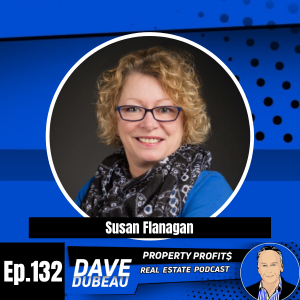
Susan Flanagan has been investing in real estate for well over 25 years, and has done everything from regular buy and holds to student rentals to rent-to-owns, as well as many flips. She started lending her own money for mortgages over 12 years ago, so it was a natural progression to eventually become a Mortgage Broker so that she could connect lenders with borrowers on a regular basis. She is still an active investor but mainly focused on private lending these days. Susan is known as the “go-to person” when it comes to Private Money Lending.
In this episode, Susan shares what a ‘private money lender’ is and how useful these lenders are to real estate entrepreneurs especially when investors don’t qualify for a bank mortgage. With a private money lender it’s fast and not much of a hassle.
Topics Covered:
01:30 – What is private money lending
02:09 – Is there any difference between private money lenders and hard money lenders
05:28 – What are the advantages and disadvantages of using different refinancing options
08:03 – What do they need private money for
08:33 – How to qualify for a private money loan
09:33 – When do people usually use private money for first mortgages
11:35 – Why do people get on JV partners at the onset when they could go through private money lenders
12:51 – A logical reason as to why go for private money lenders rather than JV right away
Key Takeaways:
“Another good example of why real estate investors use private money is and I just did this on my last project. I took a second mortgage on one of my rental properties. I use that money for my down payment and my rental costs. And then I also took out the first mortgage on the purchase. All were private money again. And this is very expensive when you really work it in there. However, when I looked at all my numbers at the end of the day, I’m still making a decent profit once I flip the property.” – Susan Flanagan
“Sometimes it makes sense that people are using private money. First of all, it’s probably a lot less onerous to qualify. Second of all is probably, it’s a lot faster than jumping through all getting it through a big bank. And third of all, it’s when your debt ratio and all that kind of jazz that the banks are looking at don’t line up.” – Susan Flanagan
“There are many other reasons why you need private money. It could be a bridge loan, it could be you’re in the middle of selling, but then you need it. And it’s fast.” – Susan Flanagan
“The biggest thing you have to qualify for is to show that you can pay it back.
We want to know the story, the property, the exit strategy. I don’t care about your debt ratios. We don’t say we don’t care about your credit report. But if it tells me a story about your character that we don’t like, then I do care about it.” – Susan Flanagan
“What I do suggest to a lot of investors though, don’t try to figure this out on your own. I say give me a call. And let’s brainstorm before you purchase it. And sometimes, getting a couple of people’s input prior is better than making the decision going in, no conditions, the works and then finding out this one isn’t a great property to even do this strategy with.” – Susan Flanagan
“It’s just another option for people to explore without assuming the only way to do it is to bring in a JV partner who qualifies for the mortgage.” – Susan Flanagan
Connect with Susan Flanagan:
privatemoney4mortgages.com
Facebook
Instagram
Twitter
LinkedIn
Connect with Dave Dubeau:
Property Profits Podcast
www.davedubeau.com
www.investorattractiondemo.com
Facebook
LinkedIn
Enjoyed the Podcast?
Please subscribe on iTunes for updates
Tuesday Oct 06, 2020
Tuesday Oct 06, 2020
What you’ll learn in just 17 minutes from today’s episode:
Learn and understand how preconstruction condos work from an investor, buyer, and developer’s point of view
Learn how to leverage from purchasing pre-construction condos
Find out the pitfalls when diving into this investment strategy so you are forewarned at the onset
Resources/Links:
www.hersh.ca
Summary:
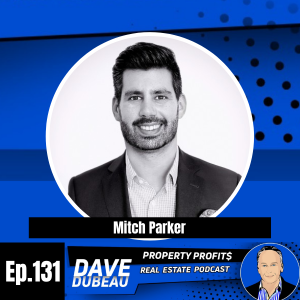
Mitch Parker is an energetic and passionate, real estate sales and investment expert. He is the Vice President of Sales and Marketing with Hersh Condos; a real estate brokerage specializing in marketing and selling some of the top new developments in the Greater Toronto Area. He’s been investing in real estate since 2006 and has transacted hundreds of millions of dollars of property for both clients and himself while becoming a go-to media expert featured on Canada Am, CTV, SiriusXM, Toronto Sun, Huffington Post, and more.
In this episode, Mitch shares what goes into the whole process of preconstruction condos, the timeframe with which it can be livable from inception. Basically, he walks us through strategies in which you can profit from these properties while under construction and during the time it’s ready for occupancy, while also sharing potential disadvantages of this type of investment strategy.
Topics Covered:
01:16 – What is a pre-construction condo
03:08 – From student housing how did he transitioned to pre-construction condos
05:40 – What goes through when you are ‘assigning a property’ in pre-construction condos
07:30 – How long is the property livable from inception
08:38 – As a buyer, how much do you put up as down payment
10:09 – Timeframe with which you fully pay your down payment
11:29 – How do developers profit from this whole pre-construction condos
13:43 – What are the disadvantage of this investment strategy
Key Takeaways:
“Originally, I was selling homes, I was selling condos. And then I love business. I love the scalability of a business. So, selling buildings allows me to do that where you can come in some days, we’re selling like 120 to 150 condos in one day.” – Mitch Parker
“With pre-construction condos, if you can assign it down the road and make a fortune, that’s awesome. But you have to have that plan B, where you’re going to close the property, put a tenant in also, and sort of ride it out until the values are stabilized. At the end of the day, that’s really how you build wealth, by keeping the properties, paying down the mortgage, or having a tenant pay down the mortgage. And I think you thank yourself at the end of the day for it.’ – Mitch Parker
“Typically, a deposit structure would be like 5,000 on signing, balance, 5% in 30 days, and then your next 5% might come six months down the road, and then you might have another five for a year and a half down the road. So, it’s staggered out pretty well which is one of the nice advantages of doing it pre-construction condos.” – Mitch Parker
“And from a developer’s side, they’re putting up their own capital, they’re investing their time into it, you’re into hundreds of millions of dollars with these things. They do get paid well, for sure. But I would say it’s a direct correlation of the incredible risks that they take as well.” – Mitch Parker
“You always want to be working with a developer that has done it before and has built that kind of product before. You know a lot of headlines have come out about projects that are not getting built. And I think that’s probably the biggest risk, but typically, buyers are protected. The money that you put in a deposit goes into a lawyer’s trust account.” – Mitch Parker
“Some people like buying houses because they ultimately have the control of what they can do with the property, and with condos, you own a box in what is one of many, so you’re a little bit restricted. So, I think condos have to be your style and it has to be what you want to invest in. But it comes down to personal preference at the end of the day.” – Mitch Parker
Connect with Mitch Parker:
hersh.ca
LinkedIn
Instagram
Facebook
Connect with Dave Dubeau:
Property Profits Podcast
www.davedubeau.com
www.investorattractiondemo.com
Facebook
LinkedIn
Enjoyed the Podcast?
Please subscribe on iTunes for updates