Listen on:









Episodes

Thursday Feb 17, 2022
Thursday Feb 17, 2022
Ava Benesocky and August Biniaz joined forces in 2019. Realizing the pain points Canadian investors were facing in both of their fields of expertise, they founded CPI Capital. CPI Capital is a Canadian-based real estate investment firm, in the business of discovering, acquiring, improving, and actively managing US Multifamily Rental Value-add Real Estate Assets. In this episode, Ava and August talk about doing cross-border passive real estate investments in Canada and the US and how they make this easy through nurturing.
Checkout: Raising Capital Without Rejection Full-Day Workshop (Online): https://investorattractionworkshop.com/
What you'll learn in just 17 minutes from today's episode:
Discover why areas with reduced crime rates and have consistent growth in jobs, population, income, and rent are great places to do real estate investing;
Understand the importance of educating interested investors before they decide to sign up for the group;
Find out how CPI Capital makes cross-border investments possible, all while complying with both sides’ regulations.
Resources/Links:
Sign up here to receive CPI Capital’s 5 Great Tips to Be a Successful Passive Real Estate Investor: http://cpicapital.cpicapital.ca/newsletter
Sign up here to join CPI Capital’s group of investors: http://cpicapital.cpicapital.ca/investor
Canadian Passive Investing Academy: https://www.youtube.com/channel/UCBliV4We30bjaKqmqri8jQg
Topics Covered:
01:23 – August’s real estate background and how it led to his and Ava’s partnership
03:10 – Ava’s experience in doing real estate and the problem CPI Capital solves
04:14 – The kind of markets CPI Capital is focusing on these days
06:20 – An educational journey of looking for the problem and providing a solution for it
09:26 – Talking about the process one needs to go through to be part of CPI Capital’s group of investors
12:21 – Complying to the regulations of both Canada and the US; turning the Canadian fund into an accredited fund
13:42 – Comparison between the accredited investor qualifications in Canada and US
15:43 – The power marketing and nurturing have on gaining new investors on board
17:20 – What encouraged them to start a YouTube channel and make educational contents
Key Takeaways:
“So we really went on this massive educational journey because of course, when investors are going to be trusting us with their money, we better make sure that we know the ins and outs of the business.” – Ava Benesocky “For our fund to be able to invest into the US fund and still comply on the Securities and Exchange Commission, the fund has to be an accredited fund. And for that fund to be an accredited fund, there are two ways: (1) every single one of the investors is accredited, or (2) the fund has over $5 million in assets. That’s how we stay compliant on both Canadian side and the US side.” – August Biniaz “We do a lot of marketing. We do a lot of marketing to get the word out. I speak on as many platforms as I can across Canada. People hear what I have to say. Nobody catches on the first time; there’s a seed that’s planted in their mind about this alternative investment opportunity. It’s available to them. We do a lot of nurturing when it comes to that. Never invest in a business that you don’t understand.” – Ava Benesocky
“Just like how our company started with finding a solution to a problem, our educational content also started the same way. We saw that there isn’t a cross-border platform that teaches us about raising money in Canada, raising money in the US, the difference, the cross items that exist. That’s kind of like the impetus for us to start our YouTube show and a lot of other educational content that we create. It was to solve that problem well.” – August Biniaz “Building wealth passively. Who doesn’t want to make money while they’re sleeping? Not a lot of people know that that’s an option. You don’t have to be an active real estate investor. You can put your money into real estate, write a check, sit back, relax, and have people like us do all the hard work for you.” – Ava Benesocky Connect with Ava and August:
Website: http://cpicapital.ca
LinkedIn: https://www.linkedin.com/company/canadian-passive-investing
YouTube: https://www.youtube.com/channel/UCBliV4We30bjaKqmqri8jQg
LinkedIn (Ava): https://ca.linkedin.com/in/avabenesocky-cpi-capital
Connect with Dave Dubeau:
Podcast: http://www.propertyprofitspodcast.com/
Website: https://davedubeau.com/home
Investor Attraction Workshop: http://www.investorattractionworkshop.com/
Facebook: https://www.facebook.com/thedavedubeau
LinkedIn: http://linkedin.com/in/davedubeau
Enjoyed the Podcast?
Please subscribe on iTunes for updates

Monday Feb 14, 2022
Monday Feb 14, 2022
Jen Josey is a real estate investor, coach, speaker, blogger, podcast host, and bestower of badassery. She uses her humor and experience to inspire and educate others while coaching with integrity. Jen is the creator of REIGN, the Real Estate Investor Growth Network. She is a coach for HomeSchooled by Tarek El Moussa, Certified Canfield Trainer, Certified Knowledge Business Broker, Certified Practitioner of Neuro-Linguistics Programming, and Certified Professional Life Coach. She lives in Raleigh, NC with her husband, Vance, two dogs, and two cats. In this episode, Jen shares the story of how she was able to do a 5-day flip along with tips and the factors she considered on doing so.
Checkout: Raising Capital Without Rejection Full-Day Workshop (Online): https://investorattractionworkshop.com/
What you'll learn in just 17 minutes from today's episode:
Understand why you should make sure not to over-renovate when financing condos and townhomes
Discover the factors involved in doing a 5-day flip in real estate
Find out how you can work on doing a flip in just 5 days through tips and stories from an expert
Resources/Links:
Website: www.TheRealJenJosey.com
eBook: Mastering My Mindset
Topics Covered:
01:30 – Who is Jen Josey? How did she get involved in real estate investing?
02:21 – Five factors for a 5-day flip: (1) the type of property, (2) marketing, (3) the team of contractors
07:30 – (4) type of profit margin, (5) financing the 5-day flip
11:22 – What happened while working on that property Jen dealt with in early 2020 and how much of a mess it was at first
18:38 – The color-coordinated timeline Jen created for the project, the before and after photos of the property, and the total cost and profit for five days of work
Key Takeaways:
“Anything built in the 80s or 90s, if you do it just a few updates, it produces higher returns.” – Jen Josey “When I coach students, I always tell them, ‘You’d want to have an ROI percentage of at least 10% if not 15%.” – Jen Josey “Make sure you really know your numbers well.” – Jen Josey “When you’re dealing with financing for these condos and townhomes, you wanna make sure you never over-renovate. You don’t want to out-price your buyers.” – Jen Josey Connect with Jen Josey:
Website: www.TheRealJenJosey.com
Connect with Dave Dubeau:
Podcast: http://www.propertyprofitspodcast.com/
Website: https://davedubeau.com/home
Investor Attraction Workshop: http://www.investorattractionworkshop.com/
Facebook: https://www.facebook.com/thedavedubeau
LinkedIn: http://linkedin.com/in/davedubeau
Enjoyed the Podcast?
Please subscribe on iTunes for updates

Thursday Feb 10, 2022
Thursday Feb 10, 2022
Jeremy Goodrich is a real estate insurance advisor and is the host of the REI Clarity Podcast. He is the owner of Shine Insurance and specializes in making commercial real estate insurance smart and simple. As the host of the most-watched insurance agency channel on YouTube, he has answered hundreds of real estate insurance questions in a way that actually makes sense and is interesting. Jeremy speaks the language of real estate investors. In this episode, Jeremy shares four real-life stories in relation to the biggest mistakes investors make when it comes to insurance as he explains why these deeds are really bad mistakes no one would ever want to experience after learning about them.
Checkout: Raising Capital Without Rejection Full-Day Workshop (Online): https://investorattractionworkshop.com/
What you'll learn in just 17 minutes from today's episode:
Understand why cheap insurance is expensive;
Discover why you should give correct information to the agent and not trust a seller’s number when doing insurance;
Learn how the understanding of insurance’s world helps you avoid ineffective insurance policies in the future
Resources/Links:
The Complete Guide to Commercial Real Estate Insurance: https://www.shineinsurance.com/insurance-guide-for-real-estate-investors/
Topics Covered:
04:49 – Talking about how commercial insurance works in relation to the most common mistake most investors make in the insurance world
10:29 – The difference between a good insurance policy and the one that lowers your coverage through time
16:24 – Why cheap insurance is expensive
21:33 – A story that highlights why shouldn’t trust the seller’s number when it comes to insurance
27:36 – Why you should give the agent enough and correct information in order to avoid denied claims in the future
34:10 – How the line “I don’t speak insurance” causes heavy insurance problems
39:37 – Learn more about commercial insurance by visiting https://www.shineinsurance.com/insurance-guide-for-real-estate-investors/
Key Takeaways:
“You lost the person you trust the most simply because you didn’t tell them first. If you’re going to shop with more than one agent, tell the person you trust the most first; give them the opportunity to have a clean slate and go to any company they want.” – Jeremy Goodrich “The first agent you tell has the upper hand. Make sure the first agent you tell is also the person you trust the most.” – Jeremy Goodrich “Let your advisor make companies compete for you.” – Jeremy Goodrich “If you aren’t sure, ask an insurance agent for a ballpark. Never trust the seller’s number for insurance.” – Jeremy Goodrich “Always share the correct occupancy. Take the time to inform your agent thoughtfully.” – Jeremy Goodrich “There’s a basic understanding you should expect to learn, and if you don’t want to learn it yourself – which is reasonable, then you should expect your insurance advisor to give you enough information so you can understand the basics on how insurance works.” – Jeremy Goodrich “Ask questions and note whether they’re able to communicate insurance in a way that makes sense. If they can’t do that, then what is the value of your insurance advisor?” – Jeremy Goodrich Connect with Jeremy Goodrich
Website: https://www.shineinsurance.com/
Podcast: https://reiclarity.com/
YouTube: https://www.youtube.com/user/ShineInsure
Connect with Dave Dubeau:
Podcast: http://www.propertyprofitspodcast.com/
Website: https://davedubeau.com/home
Investor Attraction Workshop: http://www.investorattractionworkshop.com/
Facebook: https://www.facebook.com/thedavedubeau
LinkedIn: http://linkedin.com/in/davedubeau
Enjoyed the Podcast?
Please subscribe on iTunes for updates
Tuesday Feb 08, 2022
Tuesday Feb 08, 2022
Dakotah Charron is a young real estate developer and investor who has been able to create a successful path by chasing his passion with a relentless work ethic within the real estate development realm. He is the president of both Arete Holdings Group & NREIC. Within 3.5 years at the age of 25 he has successfully been able to be a part of many real estate investments in the form of land development, flips & rentals in various capacities. As well, he has built Manitoba’s largest real estate working community, NREIC.
In this episode, Dakotah shares how NREIC brings people together as each individual works to leverage one another. He also talks about the importance of having specialized education in a group as well as bringing in value in order to reach what’s best for all members.
What you’ll learn in just 21 minutes from today’s episode:
Discover how much of a game changer it is when you bring in experts to discuss very specialized knowledge for various members along with a one-of-a-kind experience;
Find out how to use the situation of this pandemic as a pool of opportunities; and
Understand why you should be providing value in a group for you to receive as much in return
Resources:
Arete Holdings Group: https://www.areteholdingsgroup.com/
National Real Estate Investors Community (NREIC): https://www.nreic.ca/
Topics Covered:
01:23 – Talking about the start of Earls Restaurant as well as the eligibility requirement for the members
03:42 – Where most NREIC’s members are from
04:32 – How his preceding experience in real estate led him to create NREIC
06:17 – Why real estate investors should join a real estate club
08:02 – NREIC’s focus: one-of-a-kind experiences, networking, and specialized education
11:15 – Adjusting to the changes brought by the pandemic
16:28 – Where to go and what to do when thinking about joining/creating a real estate group
19:41 – Connect with Dakotah and the NREIC
Key Takeaways:
“As any great entrepreneur story starts – when you can’t find it, you build it.” – Dakotah Charron
“When we’re not growing, we’re essentially dying. We all have an obligation to somewhat grow, serve our family, serve the community, and ultimately, the world. That’s my personal philosophy. If you want to grow, you’ve always got to be surrounded by people that are further ahead, and you also want to be pulling people up and helping people as well. That’s part of growth. From a high-level view, I think that’s the key.” – Dakotah Charron
“I try and see everything as an opportunity.” – Dakotah Charron
“If somebody wants to start something like this, look at contributing value within those communities. See how you can serve within. See how you can improve somebody else’s life within. Give, give, give and you’ll get just as much out.” – Dakotah Charron
“Leverage as many tools, researches, consultants, coaches. Be a big part of what other people are doing. Ask them how you can support them, because by being a part of the support group, by providing value, you’re going to get so much out of it. People see that. People sense that. People want to help people who help people.” – Dakotah Charron
Connect with Dakotah Charron:
Website: http://www.areteholdingsgroup.com/; http://www.nreic.ca/
Instagram: https://www.instagram.com/dakotahcharron/; https://www.instagram.com/nreic/
Facebook: https://www.facebook.com/dakotahl; https://www.facebook.com/NREIC-National-Real-Estate-Investors-Community-2249867498436299
Connect with Dave Dubeau:
Podcast: http://www.propertyprofitspodcast.com/
Website: https://davedubeau.com/home
Investor Attraction Workshop: http://www.investorattractionworkshop.com/
Facebook: https://www.facebook.com/thedavedubeau
LinkedIn: http://linkedin.com/in/davedubeau
Monday Feb 07, 2022
Monday Feb 07, 2022
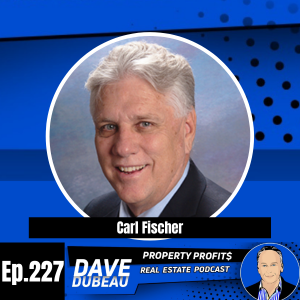
Early on in his real estate investing career, Carl Fischer learned a little-known technique to invest your retirement accounts (IRA’s, 401K’s, etc) in real estate, and defer taxes on profits until retirement. For those making nice returns in real estate, you understand the profound impact that this could have on your financial situation. Carl’s company, CamaPlan, helps others use these same self-directed techniques. Once you understand the power of self-directing, you’ll quickly realize the power of this tool to build your long-term wealth. In this episode, Carl shares why it is a must for you to spend time on your finances and health as he talks about the benefits of taking control of your retirement funds through investing in real estate.
Checkout: Raising Capital Without Rejection Full-Day Workshop (Online): https://investorattractionworkshop.com/
What you'll learn in just 17 minutes from today's episode:
Find out how you can grow your wealth by using registered retirement funds in real estate;
Understand why it is important to invest in your family and your health; and
Discover how CamaPlan works to help people create their own self-directed IRA.
Resources/Links:
Website: https://www.camaplan.com/
Topics Covered:
01:09 - What is CamaPlan and how did it come into existence?
03:28 - Talking about self-directed IRA and how it led him to invest in real estate
06:38 - Why spending your time on your finances and your health is a must
08:04 -Using retirement plans to invest in real estate
09:09 - How does CamaPlan work to help you create your own self-directed IRA?
11:06 - Connect with CamaPlan by visiting https://www.camaplan.com/
Key Takeaways:
“When you can take control of yourself and you invest in what you know and understand and get the tax benefits, it’s good for you.” – Carl Fischer “You should spend your time on your finances and on your health. You’re not going to operate on yourself. Have your doctors, health specialists, nutritionists as part of your team. Have a financial adviser, a life insurance guide on your financial team. Those are the two things that you should really look at and take control of.” – Carl Fischer “People who take control of their money watch it better than anybody else.” – Carl Fischer
Connect with Carl Fischer:
Website: https://www.camaplan.com/
Connect with Dave Dubeau:
Podcast: http://www.propertyprofitspodcast.com/
Website: https://davedubeau.com/home
Investor Attraction Workshop: http://www.investorattractionworkshop.com/
Facebook: https://www.facebook.com/thedavedubeau
LinkedIn: http://linkedin.com/in/davedubeau
Enjoyed the Podcast?
Please subscribe on iTunes for updates
Friday Feb 04, 2022
Friday Feb 04, 2022
What you’ll learn in just 15 minutes from today’s episode:
Learn about the secrets of having a group last for decades;
Understand why it’s necessary for you to join REIAs in relation to avoiding severe consequences from the law once ignorance prevails; and
Find out why industry connections, especially those of which came from various professions, is a great +1 in doing real estate.
Resources:
Website: https://ccia-info.com
Summary:
Jane Garvey is an active investor & educator focusing on real estate. She is also a rental property owner, author, group leader, and Legislative Advocate. Jane co-founded the Chicago Creative Investors Association in 1983, a real estate group that provides real estate investment education and networking through meetings and training events designed for both new and seasoned investors on a full spectrum of real estate strategies.
In this episode, Jane talks about the Chicago Creative Investors Association along with the secrets on how they’re able to make it last for decades and the importance of joining a group in relation to the government and the law.
Topics Covered:
01:08 – Chicago Creative Investors Association’s decades of history and how they made it last this long
03:35 – The kind of meetings Chicago Creative Investors Association hold along with the schedule for each, pre- and during COVID
07:12 – Providing online content in a national reach
08:39 – Why it’s beneficial for you to join a group, Chicago Creative Investors Association more so
09:47 – The consequences one has faced because of ignorance of the law
12:10 – Jane’s top favorite with regards to their members’ success stories
13:50 – Learn more about Jane and the Chicago Creative Investors Association by visiting their website: https://ccia-info.com
Key Takeaways:
“Board meetings suck. They’re boring. We could do everything that needs doing in less time that it takes to do a board meeting, so let’s just do it.” – Jane Garvey
“Industry connections. That’s huge. Knowing other people that can help you tell and decide what you’d want to be doing if you’re purchasing something or you’re hiring a contractor.” – Jane Garvey
“I can tell people just from my years of doing this where beginners and people that are not connected with a group are going to trip and fall and get punished big time by the government. Ignorance is no excuse for the government.” – Jane Garvey
“Somebody the other day called me up and said, ‘Jane, you’re the most selfless person I have ever met.’ I don’t know whether it is selfishness or I just haven’t figured out how to monetize anything, but it could be selflessness because I really do spend a lot of time helping people.” – Jane Garvey
Connect with Jane Garvey:
Website: https://ccia-info.com
Connect with Dave Dubeau:
Podcast: http://www.propertyprofitspodcast.com/
Website: https://davedubeau.com/home
Investor Attraction Workshop: http://www.investorattractionworkshop.com/
Facebook: https://www.facebook.com/thedavedubeau
LinkedIn: http://linkedin.com/in/davedubeau

Thursday Feb 03, 2022
Thursday Feb 03, 2022
Jim Pfeifer is one of the founders of Left Field Investors and the host of the Passive Investing from Left Field podcast. Left Field Investors is a group dedicated to educating and assisting like-minded investors to negotiate the nuances of the passive investing landscape and world of syndications. Jim is a former financial advisor who became frustrated with the one-path-fits-all approach of the standard financial services industry. Now, he concentrates on investing in real assets that produce cash flow and is committed to sharing his knowledge with others who are interested in learning a different way to grow wealth. Jim not only advises and helps people get started in passive real estate syndications; he also invests alongside them in small groups to allow for diversification among multiple investments and syndication sponsors. Jim believes the most important factor in successful syndication is finding a sponsor that he knows, likes, and trusts. He has invested in over 45 passive syndications including apartments, mobile homes, self-storage, private lending and notes, ATMs, commercial and industrial triple net leases, assisted living facilities, and international coffee farms and cacao producers. In this episode, Jim shares stories about mistakes in investing, his experience with troublesome investors, and why those practices should be avoided in the investors’ world.
Checkout: Raising Capital Without Rejection Full-Day Workshop (Online): https://investorattractionworkshop.com/
What you'll learn in just 17 minutes from today's episode:
Understand why good and constant communication plays a huge role in having deals;
Discover the major turn-offs that usually causes failed partnerships around a deal; and
Find out how you can effectively communicate with your investor partner especially now that we’re all in the midst of a pandemic.
Resources/Links:
Website: http://www.leftfieldinvestors.com/
Topics Covered:
02:30 - Communication as the key towards a smooth and successful partnership
05:10 - Jim’s varying relationship with different investors and his way of testing a new sponsor
07:15 - Things that have turned Jim off of deals
09:47 - Accountability issues along with the excuses he usually hears from sponsors
12:37 - Jim’s deal experiences concerning K-1s this year
14:43 - Why is it important to communicate and do distributions the right way
16:48 - The kind of communication Jim hopes for from a deal maker
18:54 - Jim’s background around investing in smaller types of deals
20:07 - What is Jim’s recommendation for small operators?
22:10 - The story behind the name “Left Field Investors”
Key Takeaways:
“Communication is the key.” – Jim Pfeifer “I’m okay with bad news. This is a risky business. I understand that everything isn’t going to go exactly to perform on. But if you promise something, you either need to deliver it or you need to explain why you didn’t.” – Jim Pfeifer “You can’t hide behind something. You just have to be honest. If you’re not going to be honest, and accept responsibility for your mistakes or the deals that aren’t working out as well, then I’m not going to give you credit if a deal goes great. Because if you’re not willing to take responsibility for the bad deals, you don’t get credit for the good ones. That’s all luck. I’m not investing with you.” – Jim Pfeifer “There’s no other product that you’re sending me other than distributions and communication, and the distribution is communication also. If you don’t get that right, then what are you doing? You’re not gonna get my money a second time.” – Jim Pfeifer
Connect with Jim Pfeifer:
Email: jim@leftfieldinvestors.com
Website: http://www.leftfieldinvestors.com/
Podcast: https://leftfieldinvestors.com/podcast/
Connect with Dave Dubeau:
Podcast: http://www.propertyprofitspodcast.com/
Website: https://davedubeau.com/home
Investor Attraction Workshop: http://www.investorattractionworkshop.com/
Facebook: https://www.facebook.com/thedavedubeau
LinkedIn: http://linkedin.com/in/davedubeau
Enjoyed the Podcast?
Please subscribe on iTunes for updates

Monday Jan 31, 2022
Monday Jan 31, 2022
Bill Gross is a broker associate with EXP Realty, specializing in probate and legal estate. He is a Certified Probate Expert and can be found at the Stanley Mosk courthouse daily to work with attorneys, clients, petitioners, investors, and other real estate professionals to help them solve their real estate problems.
In this episode, Bill walks us through the process of going over probate deals, the people to work with to help you carry things out, and the opportunities that come when you focus on this niche.
Checkout: Raising Capital Without Rejection Full-Day Workshop (Online): https://investorattractionworkshop.com/
What you'll learn in just 17 minutes from today's episode:
Find out what are probate deals and how to go about them
Discover the opportunities available for you as a real estate investor to be dealing with probate properties
Learn about who to work with that will greatly help in carrying out the process of going through these properties
Resources/Links:
Website: http://billgross.exprealty.com/
Topics Covered:
01:09 - What is probate, probate properties, opportunities, and what you need to pay attention to
02:14 - What is this tool called 'Living Trust'
03:42 - The biggest misconception about probate
04:51 - The opportunities available in probate properties for real estate investors and how to go about it
09:43 - What exactly does he do as a probate property expert realtor and investor, who he works with and how he goes about working with them
12:12 - How to have a great advantage in focusing on this kind of niche
13:06 - People who are most likely to do well in this niche
14:08 - What you can do if you don't directly get involved in this niche
Key Takeaways:
"The biggest misconception of probate is people think, well, if I have a will I avoid probate, not true. The state will use your will to determine how the probate court divvy up your assets after taking off all the fees and attorneys and all that." - Bill Gross
"But it might be easier just to find somebody in your county who really knows those rules and knows the law [probate]. Because, you know, I find that finding deals sometimes is overcoming the obstacles that the competition left." - Bill Gross
"I have three clients I would say, your estates which have a property to sell who need somebody to sell the property and also needs me to help them find the right path legally." - Bill Gross
"I think focusing on anything is an advantage. And I try to look for places where there are synergies. I work with estates and attorneys, sellers, and agents because each one makes you better working with the other ones."
"And I'd say the same as an investor, the reason why you're going to probate, I enjoy it. I think you have to enjoy what you do. When you enjoy something, and you do it consistently, you start to learn, and that learning becomes an asset to your business." - Bill Gross
"If you're not going to be it, then I think real estate is all about partnering with other people. Find someone who knows that business, search the MLS listings for probates, and see who's the listing agent that consistently has more, and you invite them for coffee or lunch or pick their brain and find out how they can work with you. Do they have listings they can show you and seek to work with them if you have a deal in particular." - Bill Gross
Connect with Bill Gross:
Website: http://billgross.exprealty.com/
Connect with Dave Dubeau:
Podcast: http://www.propertyprofitspodcast.com/
Website: https://davedubeau.com/home
Investor Attraction Workshop: http://www.investorattractionworkshop.com/
Facebook: https://www.facebook.com/thedavedubeau
LinkedIn: http://linkedin.com/in/davedubeau
Enjoyed the Podcast?
Please subscribe on iTunes for updates
Thursday Jan 27, 2022
Thursday Jan 27, 2022
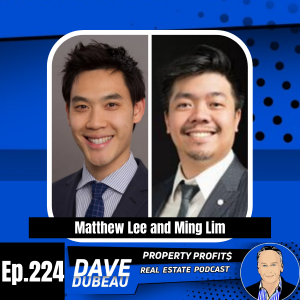
Matthew Lee is the founder and managing founder realtor at Volition Properties. He is a thought leader and advocate who are passionate about the transformative change that real estate investing offers when done correctly. Having learned hard lessons from previously "chasing the shiny object" when investing in small towns, he has now created the Volition investing business model (an investment business model that actually works in the Toronto market) predicated on risk-mitigation, scalability, and resiliency, which he has taught to thousands of aspiring investors.
Ming Lim is the head of the construction broker at Volition Properties and a passionate educator. He brings 20 years of real estate investment experience in Toronto, the GTA, and Southwest Ontario to the Volition team. He loves nothing more than to teach, mentor, and advise. His background in Computer Science from the University of Waterloo and construction experience give him a unique analytical lens on investing and a practical approach to implementing investing strategies.
Are you interested in investing in the Greater Toronto Area?
Do you like investing in high-priced markets?
Join Matthew and Ming in this episode as they share with us the massive benefits of investing in high-cost markets. They talk about the different investment classes you can build your portfolio on and how to scale further to more sophisticated ones. They also include numbers and analysis of the different investment classes and how you earn more and lessen the time it takes to make profits.
And they are not at all theoretical, for what they present is all based on their experiences doing it themselves. Besides, they have more sustainable strategies, risk-mitigated, a better tenant profile, and cash-flowing properties approach.
Checkout: Raising Capital Without Rejection Full-Day Workshop (Online): https://investorattractionworkshop.com/
What you'll learn in just 17 minutes from today's episode:
Find out what basic assets you can buy inexpensive markets that are considered a building block to creating your portfolio and scale higher to more sophisticated properties
Discover how you can employ this strategy when investing in crazy expensive markets to maximize your return and minimize the length of time to scale higher
Learn how you can do better even with limited cash flow in these expensive markets
Resources/Links:
Website: https://www.volitionprop.com
Topics Covered:
01:39 - What is Volition Properties and what do they do
03:48 - The core of their business and the work that Volition Properties do and how they go about it
05:54 - Why and how to invest in crazy expensive markets: the five key questions to ask when deciding to invest in Toronto
09:43 - Taking a look at the home price index to determine where the major economic growth is happening
13:18 - Understanding why there is continued in the Toronto market despite the pandemic
14:48 - Who are they [Volition Properties] targeting: uncovering their tenant profile
19:18 - How to bypass heavily tenant-favored law in Toronto
21:29 - Who are the buyers and where are they buying in Toronto
23:09 - Type of asset you want to buy especially if you're not a sophisticated investor
24:19 - The single most desirable feature to determine where to buy
25:57 - Best places to invest in Toronto
27:30 - Looking at investing beyond the financials and the return: 4 types of risk with an acronym of TIME
33:28 - The role of cash flow and when does it matter
37:39 - Employing the power of the multiplier effect in Toronto properties
42:48 - The bigger and better deals you can buy in Toronto that will have you cash flowing at the same time increase the value of property
49:14 - Transit analysis on turnkey properties
50:21 - More numbers and analysis on successful deals they have done in the past
51:19 - Doing better with limited cash flow
01:00:24 - People think they're investing, but they're actually gamblingyou
Key Takeaways:
"When you were seeing Toronto average prices, it was really a tale of two cities where you're seeing downtown continue to grow and expand in price, but uptown, not growing at nearly the same sort of rate. That's why it's really important not just to be an expert in whatever city you're investing in, but an expert within the neighborhoods within that city." - Ming Lim
"A lot of times people are looking at the property, and then figuring out the tenant. And that's the wrong way to do it. As a business, you don't design the product and then figure out who you're going to sell it to. You're trying to figure out what your customer is? What do they need? And how can you fill that before you go and create a product and investing is no different." - Ming Lim
"The idea here is, in a higher growth market, crazy expensive market, let's call it you have the opportunity to buy a property, at10% growth, you only need to wait about two and a half years before you've built enough equity in that property through appreciation and mortgage pay down to refinance, do an equity ticket and go buy another life property." - Ming Lim
"How do you get those higher rents, and this is where you start hearing about things like renovictions, these big tenant advocacy groups start getting involved. We bypass all of that by just focusing on an inherently transient tenant profile right from the get-go." - Matthew Lee "Transit is the single most desirable feature to help you determine where to buy." - Matthew Lee
"When you're thinking about where and what to buy, we need to start thinking about expanding our criteria and broadening our thinking a little bit in terms of what is it that our renters want." - Matthew Lee
Connect with Matthew Lee and Ming Lim:
Website: https://www.volitionprop.com
Connect with Dave Dubeau:
Podcast: http://www.propertyprofitspodcast.com/
Website: https://davedubeau.com/home
Investor Attraction Workshop: http://www.investorattractionworkshop.com/
Facebook: https://www.facebook.com/thedavedubeau
LinkedIn: http://linkedin.com/in/davedubeau
Enjoyed the Podcast?
Please subscribe on iTunes for updates
Monday Jan 24, 2022
Monday Jan 24, 2022
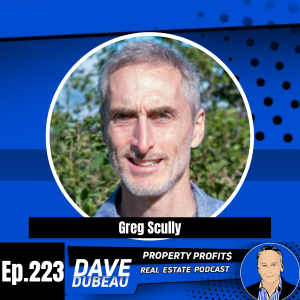
Greg Scully is a former small business owner with his wife and business partner, Kim. He also retired after a 20-year career with Frito-Lay. They have been investing in real estate since 2016. Currently, their portfolio consists of an ownership interest in over 150 units in Tennessee and Indiana with a market value of $4,200,000. They have also participated in a land development project in South Carolina. He has recently partnered to scale both the flipping and multifamily investment opportunities in central and eastern Tennessee.
In this episode, Greg shares the foundational elements of a joint venture and syndication and how to go about raising capital to fund these partnerships.
Checkout: Raising Capital Without Rejection Full-Day Workshop (Online): https://investorattractionworkshop.com/
What you'll learn in just 17 minutes from today's episode:
Find out how to go about joint venture partnerships and syndications, the costs involved, and where to get capital investors
Discover strategies on how to tighten your network base for joint venture and syndication partners
Learn about one tool he uses to build that know-like-trust factor in nurturing relationships for your network base
Resources/Links:
Website: https://realwealth.solutions/
Topics Covered:
00:53 - What is his top investment strategy
01:35 - Number of flips he does in a year
02:07 - Multifamily size he's looking into these days
03:03 - Differentiating joint ventures from syndication
03:51 - The size of properties he brings on JV partners or scales it up to syndication
05:04 - Ideal number of JV partners for joint partnership
05:40 - Costs involved when dealing with syndications
08:17 - How to go about syndication and where to find capital partners
09:41 - Finding active and passive investors among their network base
10:26 - Minimum amount he requires from syndication partners at the time he started syndicating
12:24 - How has his podcast benefitted him and his real estate investing business
Key Takeaways:
"I am of the mind that fewer is better [number of JV partners]. If you can keep it under six; that would be my sweet spot." - Greg Scully
"We came up with education platforms; we often come along with a pretty tight network. So that is largely where our initial investor base came from, which is the relationships. We paid for education to ramp up and accelerate our growth in this business." - Greg Scully
"It's just been a great avenue [having a podcast]. I like these longer conversations instead of popping in and out of social media. This lends a lot more to my personality. It's a great way for people to get to know you. You can just get much more granular with questions, and things are this way or that way. And through those kinds of conversations, you can build trust with each other. People will work with you in business when they like, know, and trust you." - Greg Scully
Connect with Greg Scully:
Website: https://realwealth.solutions/
LinkedIn: https://www.linkedin.com/in/gregjscully/
Connect with Dave Dubeau:
Podcast: http://www.propertyprofitspodcast.com/
Website: https://davedubeau.com/home
Investor Attraction Workshop: http://www.investorattractionworkshop.com/
Facebook: https://www.facebook.com/thedavedubeau
LinkedIn: http://linkedin.com/in/davedubeau
Enjoyed the Podcast?
Please subscribe on iTunes for updates